My First Gorilla Trekking Experience: An Unforgettable Journey with Chimps and Gorillas
The Beginning of a Dream Gorilla Trek
For many travelers, seeing mountain gorillas in the wild is a dream that begins years before the actual journey.
It often starts with a photograph.
A documentary.
A story from another traveler.
Or a simple curiosity about one of the world’s most fascinating animals.
My first gorilla trekking experience was not just another activity on a holiday itinerary.
It was a journey into a completely different world.
A world of mist-covered mountains, ancient forests, and incredible wildlife connections.
Deep inside Uganda’s rainforest, I discovered that gorilla trekking is not only about seeing animals.
It is about understanding them.
It is about respecting their environment.
It is about witnessing family relationships that feel surprisingly familiar.
With Chimps and Gorillas, every traveler has the opportunity to experience this remarkable adventure through carefully planned gorilla and chimpanzee safaris.
From arranging permits to selecting comfortable lodges and providing experienced guides, every detail is designed to make the journey smooth and memorable.
Preparing for My First Gorilla Trekking Experience
Before arriving in Uganda, I wondered what the trek would really be like.
Would it be difficult?
Would I actually see gorillas?
Would the experience feel as emotional as people described?
These questions are common among first-time visitors.
The preparation stage became part of the excitement.
I packed:
- Waterproof hiking boots.
- Long trousers.
- Rain jacket.
- Comfortable backpack.
- Camera equipment.
- Extra batteries.
- Water bottle.
- Light snacks.
The rainforest environment can change quickly.
One moment the sun shines through the trees.
The next moment, gentle rain creates a magical atmosphere among the vegetation.
Preparing properly helped me focus completely on the experience instead of worrying about small challenges.
Arrival in Uganda
Landing at Entebbe International Airport was the beginning of an unforgettable adventure.
Uganda immediately felt welcoming.
The warm hospitality, beautiful landscapes, and friendly people created excitement about what was ahead.
The Chimps and Gorillas team welcomed me and explained the safari schedule.
The briefing covered:
- Travel arrangements.
- Gorilla trekking guidelines.
- Conservation importance.
- Safety procedures.
- Cultural expectations.
The professionalism of the team immediately created confidence.
I knew the journey had been carefully planned.
The Road Toward Bwindi Impenetrable National Park
The journey from Entebbe toward Bwindi was one of the most beautiful parts of the safari.
Uganda’s landscapes slowly changed during the drive.
Busy towns became peaceful villages.
Open fields transformed into green hills.
The famous landscapes of southwestern Uganda appeared across the horizon.
The closer we moved toward Bwindi, the more exciting the journey became.
The forest seemed mysterious.
Covered in mist.
Full of life.
Bwindi Impenetrable National Park is one of Africa’s most important rainforest ecosystems.
The forest protects endangered mountain gorillas and countless other species.
Visitors can learn more about the importance of this protected area through resources from the UNESCO World Heritage Centre.
The Night Before the Trek
The evening before my trek was filled with excitement.
The lodge overlooked the forest-covered mountains.
The sounds of nature surrounded everything.
Bird calls echoed through the trees.
The cool mountain air created a peaceful atmosphere.
Tomorrow was the day I had waited for.
My first gorilla trek.
I imagined what the moment would feel like.
Would the gorillas appear quickly?
Would I be able to capture photographs?
Would they look like the animals I had seen in documentaries?
The anticipation was unforgettable.
Meeting the Gorilla Trekking Team
Early the next morning, we traveled to the park headquarters.
The area was filled with travelers from different countries.
Everyone shared the same excitement.
Some were first-time visitors.
Others had returned because their previous experience had been so powerful.
The rangers from Uganda Wildlife Authority (UWA) provided a detailed briefing before entering the forest.
They explained:
- How to behave around gorillas.
- Why conservation rules matter.
- How to respect the animals’ space.
- What to expect during the trek.
Listening to the rangers made the experience even more meaningful.
This was not simply a wildlife visit.
It was a chance to enter the home of a protected gorilla family.
Entering the Rainforest
The first steps into Bwindi felt unforgettable.
The forest was completely different from any place I had visited before.
Towering trees surrounded us.
Green vegetation covered the ground.
Small streams crossed the trail.
The air felt fresh and untouched.
Every sound created curiosity.
A bird calling in the distance.
Leaves moving above us.
The footsteps of the trekking group moving slowly forward.
The forest itself became part of the adventure.
The journey was not only about reaching the gorillas.
It was about experiencing everything along the way.
The First Signs of Gorillas
After several hours of hiking, our guide suddenly stopped.
Everyone became quiet.
The trackers had found signs that the gorillas were nearby.
Fresh vegetation had been eaten.
Branches were broken.
The forest floor showed evidence of recent movement.
The excitement was impossible to describe.
Everyone knew the moment we had been waiting for was close.
The guide gently asked us to remain calm and move carefully.
A few more steps.
A few more moments.
Then everything changed.
The trees opened slightly.
And there they were.
The mountain gorillas.
The Moment I Finally Saw the Gorillas
The first sight of the gorillas was a moment I will never forget.
After hours of walking through the rainforest, every sound suddenly became clearer.
The movement of leaves.
The distant calls of birds.
The quiet footsteps of our group.
Then the guide gently pointed toward a small opening between the trees.
A dark shape moved slowly through the vegetation.
At first, it was difficult to understand what I was seeing.
Then the details became clear.
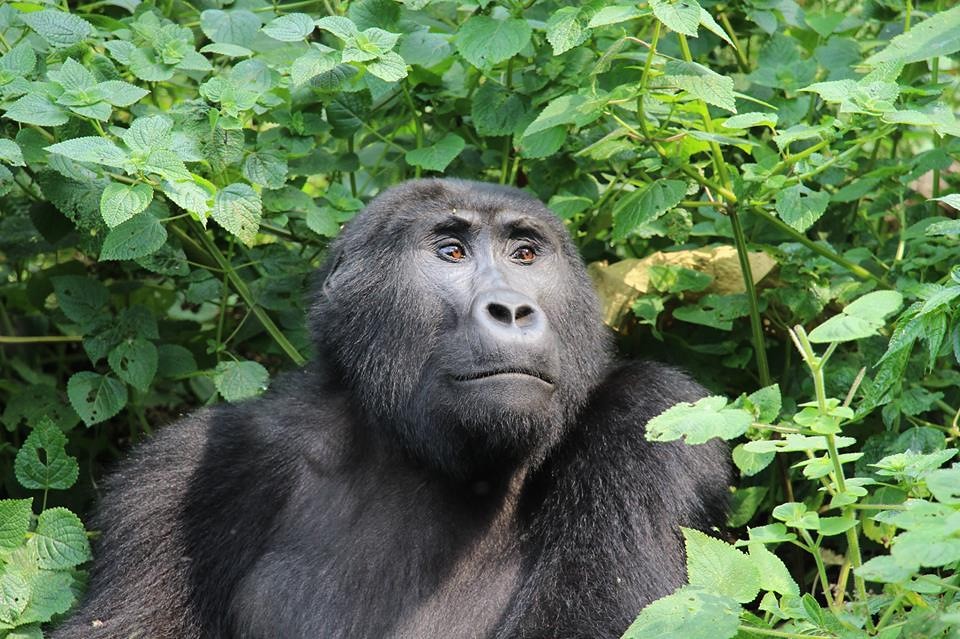
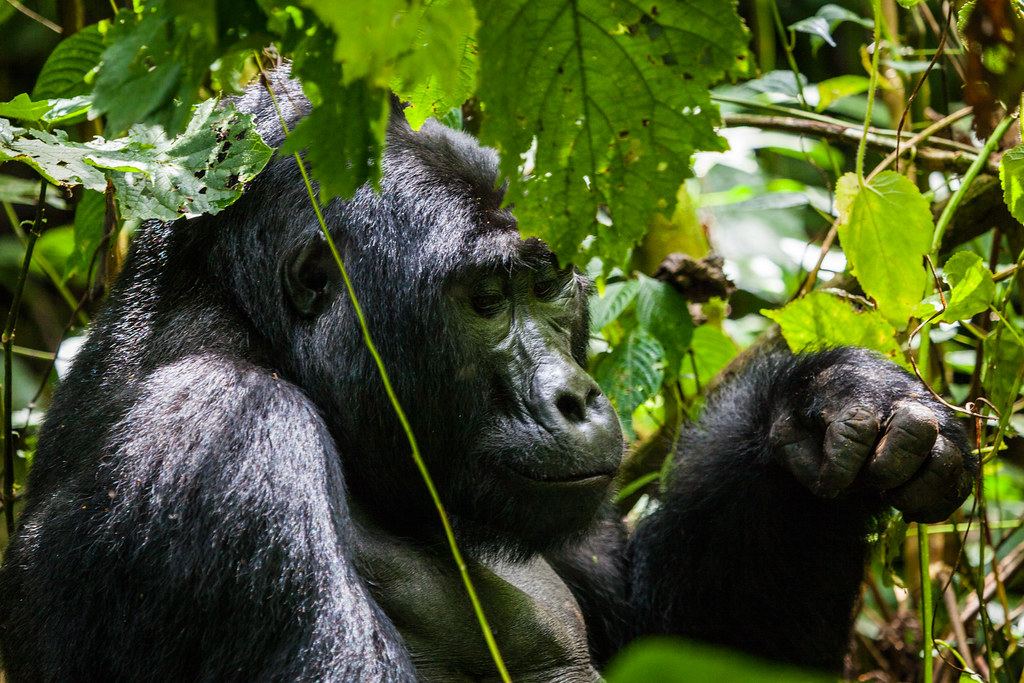
A mountain gorilla was sitting peacefully beneath the forest canopy.
The excitement of the entire group disappeared into silence.
Everyone simply watched.
This was the moment I had imagined for years.
My first gorilla trekking experience had finally become real.
Meeting a Gorilla Family in the Wild
The gorilla family was calm and relaxed.
They were not performing for visitors.
They were simply living their natural lives.
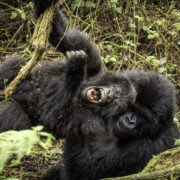
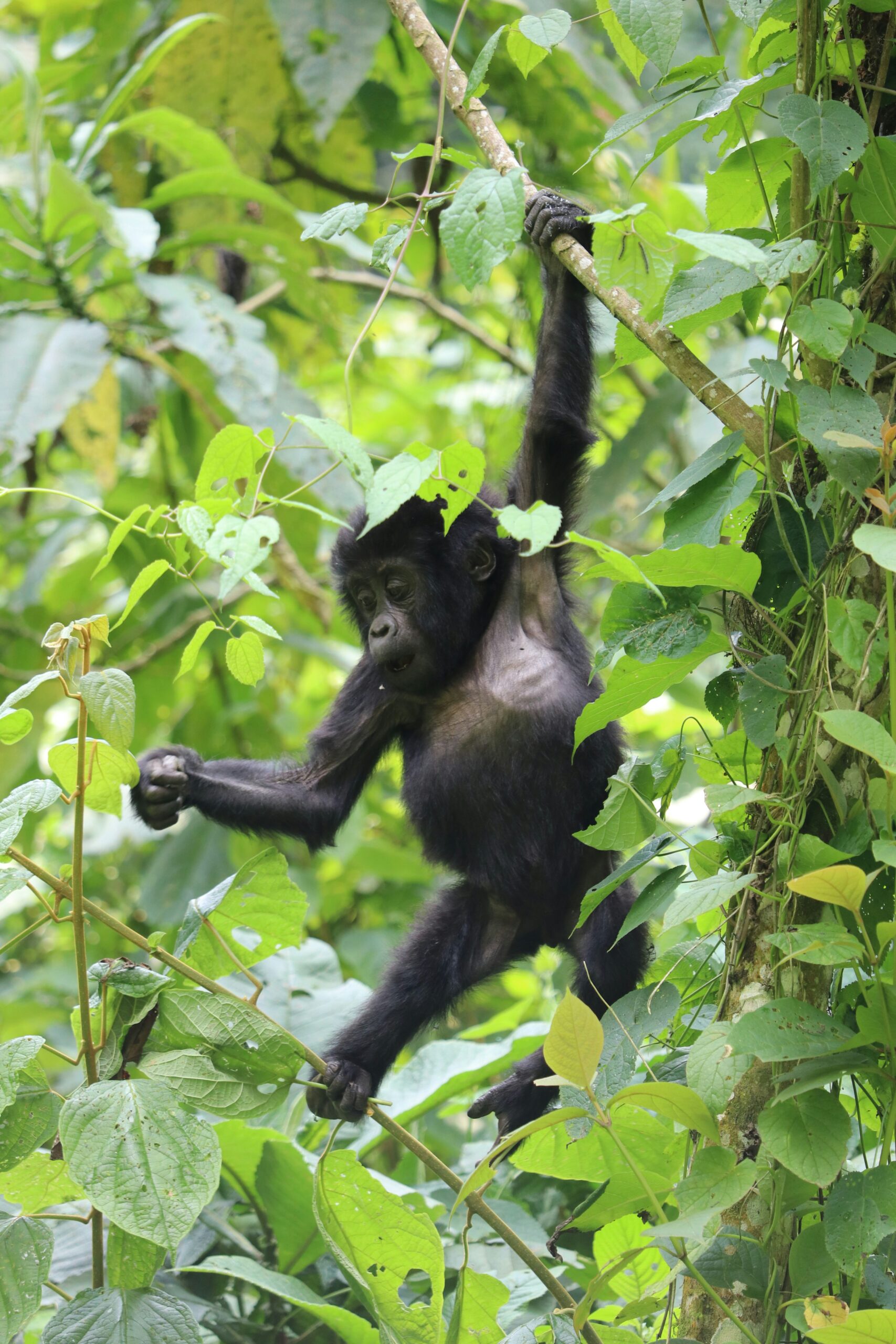
A young gorilla climbed across a fallen tree.
Another juvenile chased its sibling through the vegetation.
Nearby, a female gorilla carefully groomed her infant.
The mother held the baby close while moving slowly through the forest.
The scene felt incredibly familiar.
It reminded me that gorillas are not just powerful animals.
They are families.
They have relationships.
They communicate.
They protect each other.
This was the part of the experience that touched me most.
The Silverback Appears
Then came the moment everyone hoped for.
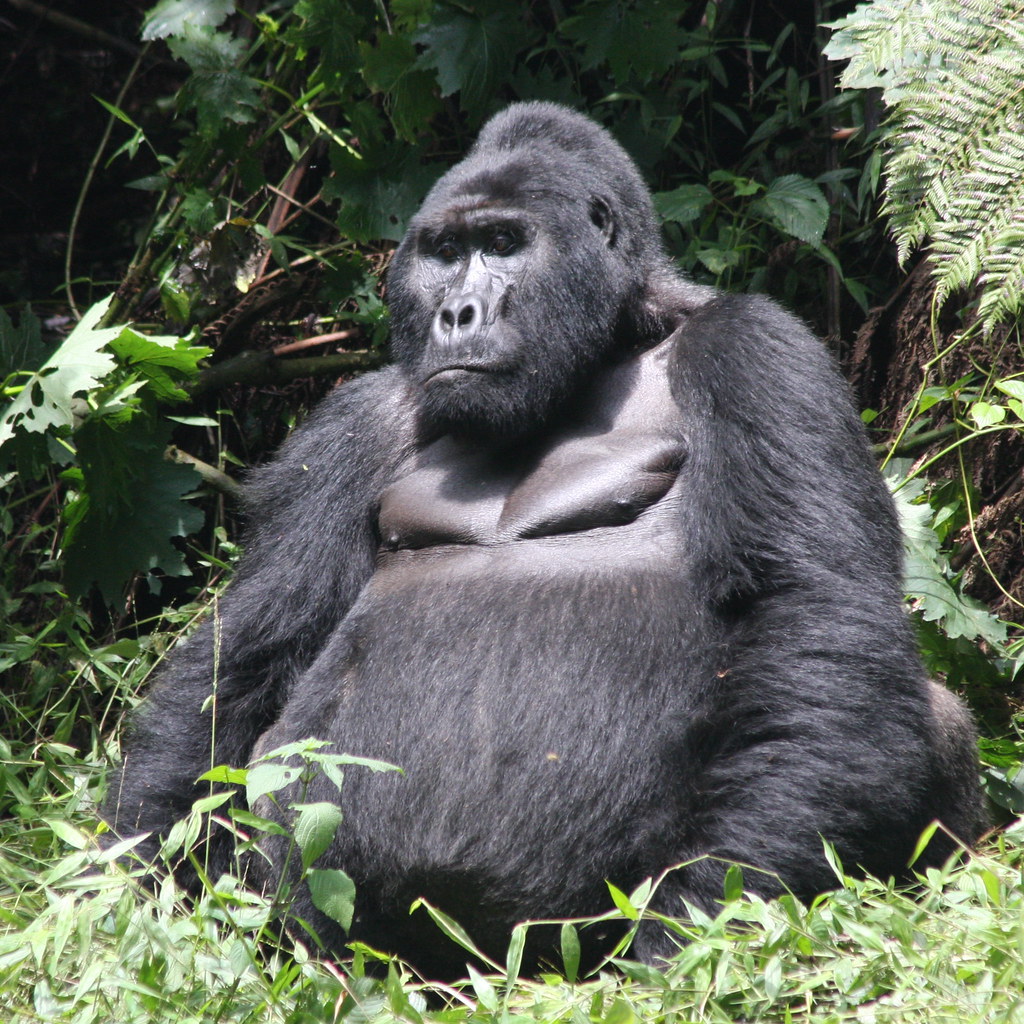
The silverback emerged.
He moved slowly through the vegetation with complete confidence.
His size was impressive.
His shoulders were enormous.
The gorillas presence immediately changed the atmosphere.
But what surprised me most was his calm personality.
He was not aggressive.
He was not frightened.
He simply observed.
The silverback carefully watched his family while allowing the younger gorillas to continue playing.
He occasionally looked toward us before returning to his daily activities.
Standing there, only a few meters away, was one of the most powerful wildlife moments I had ever experienced.
The encounter showed that strength and gentleness can exist together.
An Emotional Connection Beyond Words
Many people ask why gorilla trekking feels different from other wildlife experiences.
The answer becomes clear when you are standing in the forest.
You are not watching from a vehicle.
You are not observing from a distance.
You are sharing a quiet moment inside their environment.
The gorillas decide what happens.
Gorillas continue feeding.
Mountain gorillas move around.
Gorillas always interact with each other.
Visitors are simply respectful guests.
A My First Gorilla Trekking Experience is often remembered because it creates emotions that are difficult to explain.
A Baby Gorilla That Stole Everyone’s Attention
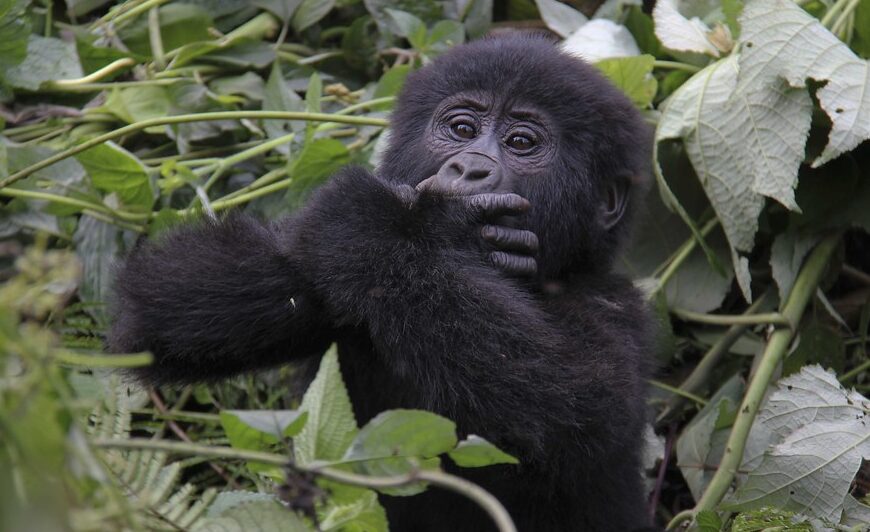
During the trek, one small gorilla became the favorite of the group.
The infant was curious and playful.
It moved carefully around its mother before looking toward the visitors.
The mother remained calm and protective.
The baby eventually climbed onto her back and rested.
Everyone watched quietly.
Nobody wanted to disturb the moment.
Our guide explained that young gorillas spend much of their early life learning from their families.
They observe adults.
They practice social behaviors.
They develop important survival skills.
Watching this natural learning process was one of the most beautiful parts of the trek.
The Importance of Gorilla Conservation
While experiencing such a special moment, it becomes impossible not to think about conservation.
Mountain gorillas have faced many challenges throughout history.
Their survival depends on protecting their forests, supporting local communities, and continuing conservation programs.
Organizations such as the International Gorilla Conservation Programme work alongside conservation partners to protect gorillas and their habitats.
The work includes:
- Gorilla monitoring.
- Community education.
- Habitat protection.
- Conservation research.
- Support for local communities.
Every responsible visitor contributes to these efforts.
A gorilla safari is not only a holiday.
It is also a contribution toward protecting one of the world’s most endangered animals.
Why Responsible Tourism Matters
A successful gorilla trekking experience depends on responsible travel.
Visitors are required to follow strict guidelines because the health and safety of gorillas are the priority.
Important practices include:
- Maintaining respectful distance.
- Avoiding loud noises.
- Not using flash photography.
- Following ranger instructions.
- Never disturbing natural behavior.
These rules ensure future generations can also experience the beauty of mountain gorillas.
Responsible tourism creates a balance between adventure and conservation.
The Role of Experienced Guides
One of the reasons my experience was so meaningful was the knowledge of the guides.
They did much more than lead us through the forest.
They explained:
- Gorilla behavior.
- Forest ecosystems.
- Conservation challenges.
- Local culture.
- Wildlife history.
Their passion was clear.
They understood every trail.
They recognized signs left by gorillas.
They knew how to approach the animals respectfully.
The guides transformed the trek from a simple walk into an educational adventure.
This is something frequently mentioned in Chimps and Gorillas Reviews from travelers around the world.
Combining Gorilla Trekking with Chimpanzee Tracking
After completing my gorilla trek, I continued my adventure with chimpanzee tracking in Kibale Forest National Park.
The experience was completely different.
Gorillas are calm and thoughtful.
Chimpanzees are energetic and constantly active.
The forest suddenly became louder.
Chimpanzees called from the treetops.
Branches moved above us.
Groups communicated through powerful vocalizations.
Watching chimpanzees reminded me how diverse Uganda’s forests are.
A combined gorilla and chimpanzee safari provides two unforgettable perspectives on Africa’s great apes.
My Chimpanzee Encounter
During chimpanzee tracking, our guide followed fresh signs through Kibale Forest.
The search itself was exciting.
We listened carefully for sounds from the canopy.
Then suddenly, a chimpanzee appeared above us.
It moved quickly between branches.
Another followed.
Then another.
Within moments, the forest came alive.
A group of chimpanzees gathered around a feeding area.
Some groomed each other.
Some rested.
Some moved between trees.
The similarities between humans and chimpanzees were incredible.
Their expressions.
Their communication.
Their social relationships.
It was another reminder of how connected all living species are.
A Complete Primate Adventure with Chimps and Gorillas
style=”font-size: 14pt; color: #000000;”>Many travelers choose Chimps and Gorillas because they specialize in creating complete primate journeys.
Their itineraries combine:
- Mountain gorilla trekking.
- Chimpanzee tracking.
- Wildlife safaris.
- Cultural experiences.
- Comfortable accommodation.
- Professional guiding.
The company helps international travelers experience Uganda’s wildlife safely and comfortably.
Guests can choose to:
Travel Advice From My Experience
Looking back, several things made my first gorilla trek easier and more enjoyable.
Prepare for the Forest Environment
The rainforest can be unpredictable.
Pack:
- Waterproof hiking shoes.
- Rain protection.
- Comfortable clothing.
- Gloves for vegetation.
- Extra camera batteries.
- Drinking water.
Stay Patient
Finding gorillas can take time.
The search is part of the adventure.
Every step through the forest creates memories.
Hire a Porter
A porter can make the trek more comfortable.
They help carry bags and provide support on difficult sections.
They also benefit directly from tourism employment.
Listen to Your Guide
The guides understand the forest.
Their instructions protect both visitors and wildlife.
Following their advice allows everyone to enjoy the experience responsibly.</p>
Creating Your Own Gorilla Story
My first gorilla trekking experience taught me that the greatest wildlife moments are not always about excitement.
Sometimes they are about silence.
A quiet forest.
A peaceful animal.
A brief connection.
A memory that remains forever.
Every traveler creates a different story.
Some remember the silverback.
Others remember a playful infant.
Some remember the forest itself.
But almost everyone leaves Uganda with a deeper appreciation for nature.
A well-planned itinerary allows travelers to experience Uganda’s most unforgettable primate encounters while enjoying beautiful landscapes, comfortable accommodation, and meaningful cultural interactions.
This itinerary by Chimps and Gorillas combines chimpanzee tracking in Kibale Forest National Park with mountain gorilla trekking in Bwindi Impenetrable National Park.
It is designed for international travelers who want a complete introduction to Uganda’s great apes while enjoying a smooth and memorable safari experience.
Day 1: Arrival in Entebbe, Uganda
Your adventure begins when you arrive at Entebbe International Airport.
A professional Chimps and Gorillas guide welcomes you and provides an introduction to your upcoming journey.
After airport assistance, you transfer to your hotel for relaxation.
Depending on your arrival time, you may enjoy optional activities around Entebbe.
Possible experiences include:
- Visiting the Uganda Wildlife Education Centre.
- Exploring Entebbe Botanical Gardens.
- Enjoying views of Lake Victoria.
- Taking a peaceful evening walk.
During your first evening, your guide explains the safari schedule and answers questions about:
- Gorilla trekking preparation.
- Weather conditions.
- Packing requirements.
- Travel arrangements.
The excitement begins building.
Tomorrow, the journey into Uganda’s wilderness starts.
Accommodation: Entebbe
Meals: Dinner (depending on arrival time)
Day 2: Transfer to Kibale Forest National Park
After breakfast, begin your journey toward western Uganda.
The drive introduces you to the beauty of Uganda’s countryside.
The scenery changes throughout the day.
Busy urban areas gradually become quiet villages, green farms, tea plantations, and rolling hills.
Your guide shares information about:
- Ugandan culture.
- Wildlife conservation.
- Local communities.
- National parks.
By afternoon, you arrive near Kibale Forest National Park.
The forest surroundings immediately create excitement.
This region is famous for its incredible primate diversity and is one of Africa’s best destinations for chimpanzee tracking.
Spend the evening relaxing at your lodge while preparing for tomorrow’s adventure.
Driving Time: Approximately 5–6 hours
Accommodation: Kibale Forest Lodge
Meals: Breakfast, Lunch, Dinner
Day 3: Chimpanzee Tracking in Kibale Forest
Today begins with an early breakfast before heading to the park headquarters.
Your guide and park rangers provide a briefing about chimpanzee behavior and trekking rules.
Then the adventure begins.
Entering Kibale Forest feels like entering another world.
The tall trees create a natural green cathedral.
Bird calls echo through the canopy.
The forest floor is covered with ancient vegetation.
Your guide searches for signs of chimpanzees.
Fresh footprints.
Fruits left behind.
Movement in the trees.
Then the first calls appear.
The chimpanzees are nearby.
Suddenly, the quiet forest becomes alive.
Chimpanzees move between branches with incredible speed.
Young chimpanzees play.
Adults communicate.
Families interact naturally.
The experience reveals the intelligence and personality of these amazing primates.
After your trek, return to the lodge for relaxation.
In the afternoon, visit the Bigodi Wetland Sanctuary.
This community conservation project offers opportunities to see:
- Birds.
- Butterflies.
- Monkeys.
- Traditional village life.
Accommodation: Kibale Forest Lodge
Meals: Breakfast, Lunch, Dinner
Day 4: Journey to Bwindi Impenetrable National Park
After breakfast, continue your journey toward Bwindi.
The drive is one of the most scenic routes in Uganda.
The landscape changes dramatically as you approach southwestern Uganda.
The famous hills of the region appear.
Small farms cover mountain slopes.
Communities live close to the forest.
Depending on your route, you may pass through Queen Elizabeth National Park.
Possible wildlife sightings include:
- Elephants.
- Buffalo.
- Uganda kob.
- Warthogs.
- Antelope species.
By evening, you arrive at your lodge near Bwindi Impenetrable National Park.
The atmosphere feels different.
The rainforest surrounds you.
Mist moves through the hills.
The sounds of nature fill the evening.
Tomorrow is the moment you have been waiting for.
Your first gorilla trek.
Driving Time: Approximately 6–7 hours
Accommodation: Bwindi Lodge
Meals: Breakfast, Lunch, Dinner
Day 5: My First Gorilla Trekking Experience
This is the highlight of your safari.
After an early breakfast, you travel to the park headquarters.
Before entering the forest, rangers provide a detailed briefing.
They explain:
- Gorilla behavior.
- Safety guidelines.
- Conservation rules.
- Photography recommendations.
The trekking group is assigned according to the location of gorilla families.
Then you begin walking into the rainforest.
Every step creates anticipation.
The trail moves through:
- Thick vegetation.
- Bamboo forests.
- Mountain slopes.
- Ancient trees.
Your guide explains the forest ecosystem along the way.
The journey itself becomes part of the experience.
After some time, the trackers communicate that the gorillas are close.
The group becomes quiet.
The excitement is impossible to describe.
Then suddenly, the trees open.
A gorilla family appears.
A mother sits peacefully with her baby.
Young gorillas play nearby.
The silverback rests calmly while observing his surroundings.
The moment feels unreal.
You are standing in the natural home of mountain gorillas.
For one unforgettable hour, you observe:
- Family relationships.
- Feeding behavior.
- Playful movements.
- Gentle interactions.
This is the moment every traveler dreams about.
This is My First Gorilla Trekking Experience.
The Emotional Moment
Many visitors say the most powerful part is not the size of the gorillas.
It is their behavior.
A silverback protecting his family.
A mother caring for her infant.
Young gorillas learning through play.
These moments create an emotional connection that photographs cannot fully capture.
After the trek, return to your lodge with memories that will last a lifetime.</p>
Accommodation: Bwindi Lodge
Meals: Breakfast, Packed Lunch, Dinner
Day 6: Gorilla Conservation and Cultural Experience
After your trek, take time to understand the connection between wildlife and local communities.
Gorilla conservation depends on cooperation between protected areas, researchers, rangers, and surrounding communities.
Organizations such as the Dian Fossey Gorilla Fund have contributed greatly to gorilla research and protection efforts.
A cultural experience may include:
- Meeting local community members.
- Learning traditional practices.
- Visiting craft workshops.
- Supporting community projects.
These interactions help travelers understand the people who share their environment with mountain gorillas.
You may also enjoy a guided forest walk focusing on:
- Birds.
- Plants.
- Forest ecosystems.
- Conservation stories.
Accommodation: Bwindi Lodge
Meals: Breakfast, Lunch, Dinner
Day 7: Return to Entebbe and Departure
After breakfast, begin your return journey to Entebbe.
The drive provides another opportunity to appreciate Uganda’s landscapes.
Depending on your departure schedule, you may stop at the Equator crossing.
Visitors enjoy:
- Photography.
- Local crafts.
- Cultural explanations.
Continue to Entebbe International Airport for your flight home.
Your journey ends with unforgettable memories of:
- Mountain gorillas.
- Chimpanzees.
- Uganda’s forests.
- Local communities.
- Conservation achievements.
Meals: Breakfast, Lunch
Practical Travel Information
Gorilla Trekking Costs
The cost of a gorilla safari depends on several factors:
- Gorilla permit fees.
- Chimpanzee tracking permits.
- Accommodation level.
- Transportation.
- Number of travelers.
- Safari duration.
- Additional activities.
Chimps and Gorillas offers customized packages suitable for:
- Budget travelers.
- Mid-range travelers.
- Luxury travelers.
Each itinerary is designed to balance comfort, experience, and value.
Gorilla Permit Information
Gorilla permits are required before trekking.
They help support:
- Gorilla protection.
- Ranger operations.
- Conservation programs.
- Community development.
Because permits are limited, advance booking is recommended.
Best Time for Gorilla Trekking
Gorilla trekking is possible throughout the year.
However, many international travelers prefer:
June to September
Benefits:
- Lower rainfall.
- Easier hiking conditions.
- Popular holiday period.
December to February
Benefits:
- Comfortable trekking weather.
- Good photography opportunities.
- Ideal for combining safari activities.
The wetter months also have advantages:
- Beautiful green forests.
- Fewer visitors.
- Fresh landscapes.
Accommodation Experience
Chimps and Gorillas recommends accommodations based on:
- Location.
- Comfort.
- Guest feedback.
- Access to trekking areas.
Options range from comfortable budget lodges to luxury forest retreats.
Most travelers appreciate staying close to the forest because it reduces travel time before trekking.
Why Travelers Trust Chimps and Gorillas
Planning a gorilla safari requires experience.
Small details can make a major difference.
Chimps and Gorillas helps travelers with:
- Permit arrangements.
- Safari planning.
- Professional guides.
- Transport.
- Accommodation.
- Flexible itineraries.
Many guests mention in Chimps and Gorillas Reviews that the company’s attention to detail and local knowledge helped create stress-free and unforgettable experiences.
Travelers can begin planning by choosing:
Why My First Gorilla Trekking Experience Becomes a Memory
A first gorilla trek is more than a wildlife adventure.
It is a personal journey that connects travelers with nature in a way few experiences can.
My first gorilla trekking experience taught me that the greatest moments in the wild are often the quiet ones.
A mother gently caring for her infant.
A juvenile gorilla exploring the forest.
A silverback calmly protecting his family.
A brief moment when a gorilla looks directly at you.
These experiences create memories that remain long after leaving Uganda.
Mountain gorillas are not simply animals to observe.
They are intelligent, social beings with strong family bonds and unique personalities.
Seeing them in their natural habitat changes the way many travelers understand wildlife.
It creates a deeper appreciation for conservation and the importance of protecting fragile ecosystems.
Uganda provides one of the world’s most meaningful destinations for this experience.
The ancient forests of Bwindi Impenetrable National Park and Mgahinga Gorilla National Park offer travelers a rare opportunity to witness mountain gorillas while supporting conservation efforts.
Responsible tourism plays an important role in protecting these endangered primates.
Organizations such as the International Gorilla Conservation Programme work to support gorilla conservation, research, and community involvement.
Every traveler who books a responsible gorilla safari becomes part of a larger conservation story.
The journey does not end when the trek is complete.
The memories continue.
The photographs continue.
The stories continue.
Many visitors return home and share their experiences with friends and family because a gorilla encounter is difficult to describe with ordinary words.
It must be experienced.
With Chimps and Gorillas, travelers receive more than a safari package.
They receive a carefully designed journey created around wildlife, comfort, conservation, and personal discovery.
From arranging permits to selecting accommodations and providing experienced guides, every detail is handled professionally.
Whether you are planning your first African adventure or returning for another primate experience, Chimps and Gorillas helps create unforgettable moments in Uganda’s forests.
Start creating your own story today.
Plan Your Safari with Chimps and Gorillas.
Request Itinerary and let our expert team design a personalized gorilla and chimpanzee safari that matches your interests, travel dates, and budget.
Frequently Asked Questions About My First Gorilla Trekking Experience
Is gorilla trekking suitable for first-time safari travelers?
Yes.
Many visitors experience gorilla trekking as their first African safari adventure.
Professional guides, park rangers, and carefully planned itineraries make the experience comfortable and enjoyable for international travelers.
Chimps and Gorillas assists first-time visitors with preparation, transport, accommodation, and trekking arrangements.
Where is the best place for my first gorilla trekking experience?
Uganda is one of the best destinations for first-time gorilla trekkers.
The main locations include:
- Bwindi Impenetrable National Park.
- Mgahinga Gorilla National Park.
Uganda also allows travelers to combine gorilla trekking with chimpanzee tracking, wildlife safaris, and cultural experiences.
How difficult is gorilla trekking?
The difficulty depends on the location of the gorilla family.
Some treks may take only a few hours, while others can require longer hiking through mountainous rainforest terrain.
Travelers should expect:
- Uneven trails.
- Slopes.
- Muddy sections.
- Changing weather conditions.
A moderate level of fitness is recommended.
How long do visitors spend with gorillas?
Visitors usually spend one hour observing a habituated gorilla family.
Although the time is limited, many travelers describe this as the most memorable hour of their lives.
The experience focuses on observing natural behavior rather than interacting directly with the animals.
What happens if I cannot complete the trek?
Gorilla trekking is organized with visitor comfort in mind.
Guides assess fitness levels and assign groups according to different abilities whenever possible.
Hiring a porter is also recommended because they provide additional support during challenging sections.
What should I pack for my first gorilla trek?
Important items include:
- Waterproof hiking boots.
- Lightweight rain jacket.
- Long trousers.
- Long-sleeved shirts.
- Gardening gloves.
- Small backpack.
- Camera equipment.
- Extra batteries.
- Water bottle.
- Snacks.
- Insect repellent.
The rainforest environment can be unpredictable, so preparation is important.</p>
Should I hire a porter?
Yes.
Many experienced travelers recommend hiring a porter.
Porters assist with:
- Carrying bags.
- Navigating difficult trails.
- Providing encouragement.
Hiring a porter also supports local communities living
around protected areas.
Can I combine gorilla trekking with chimpanzee tracking?
Absolutely.
Many travelers choose a combined primate safari because gorillas and chimpanzees offer completely different experiences.
A popular combination includes:
- Gorilla trekking in Bwindi.
- Chimpanzee tracking in Kibale Forest.
- Wildlife viewing in Queen Elizabeth National Park.
This creates a complete Uganda wildlife adventure.
What is the best time for gorilla trekking?
Gorilla trekking is available throughout the year.
Many travelers prefer:
June to September
because of generally drier conditions.
December to February
because of comfortable trekking conditions.
However, the rainy seasons also offer beautiful scenery, fewer visitors, and excellent photography opportunities.
How far ahead should I book my gorilla safari?
Booking several months in advance is recommended.
Gorilla permits are limited, especially during popular travel seasons.
Early planning also allows better choices for accommodation and safari schedules.
Why choose Chimps and Gorillas for my safari?
Chimps and Gorillas specializes in creating memorable gorilla and chimpanzee experiences in Uganda and Rwanda.
The company provides:
- Customized safari planning.
- Gorilla permit assistance.
- Chimpanzee tracking arrangements.
- Experienced local guides.
- Comfortable safari vehicles.
- Quality accommodation.
- Airport transfers.
- Flexible itineraries.
- Conservation-focused experiences.
Many guests highlight these strengths in Chimps and Gorillas Reviews, mentioning professional guides, smooth organization, and unforgettable wildlife encounters.
Final Booking Message
Your first gorilla trek is not just a trip.
There is a story awaiting to be created
The excitement of entering an ancient rainforest, is the feeling of discovering fresh gorilla signs along the trail
There is the silence that surrounds you when a mountain gorilla appears.
It is the unforgettable moment when you realize you are sharing the forest with one of the world’s most incredible species.
A My First Gorilla Trekking Experience can become one of the most meaningful adventures of your lifetime.
With Chimps and Gorillas, every journey is designed to provide authentic wildlife encounters, expert guidance, and unforgettable memories.
Whether you want to explore
Uganda’s gorillas, track chimpanzees through Kibale Forest, or combine primates with a complete wildlife safari, our team is ready to help.
Plan Your Safari today
Request Itinerary and begin your journey into Uganda’s incredible rainforest world.
Chimps and Gorillas Contact Information
Website:
https://www.chimpsandgorillas.com
Email:
info@chimpsandgorillas.com
WhatsApp:
+256 774 532 841
Your first gorilla story begins here.
Request Quote
Popular Trips
Rwanda
- 1 Day Rwanda Gorilla Trek
- 2 Day Akagera Safari from Kigali
- 2 Day Gorilla Trek Rwanda
- 3 Day Akagera National Park Safari
- 3 Day Gorilla Trekking Rwanda
- 4 Day Rwanda Gorilla Safari
- 5 Day Rwanda Gorilla and Golden Monkey
- 6 Day Rwanda Primates Safari
- 7 Day Rwanda Wildlife and Gorilla Safari
- 8 Day Classic Rwanda Safari Tour
Uganda
- 10 Day Uganda Safari Tour
- 12 Day Uganda Gorilla and Wildlife Safari
- 3 Day Gorilla Trekking Uganda
- 3 Day Gorilla Trekking Uganda from Kigali
- 3 Day Murchison Falls Safari
- 5 Day Gorilla and Chimpanzee Safari Uganda
- 5 Days Gorilla and wildlife safari
- 6 Days Gorilla, Chimps and Wildlife safari
- 7 Day Uganda Wildlife Safari
- 8 Days Uganda Safari
Recent Posts

6-Day Lifestyle Safari Itinerary
Common Safari Mistakes to Avoid in Uganda