Trekking in the Rain Experience: Gorilla and Chimpanzee Adventures in Uganda
Why a Trekking in the Rain Experience Is One of Uganda’s Best Wildlife Adventures
For many travelers planning a safari in Uganda, the idea of trekking through a rainforest during rainfall initially sounds intimidating. Images of muddy trails, slippery slopes, soaked hiking boots, and mist-covered forests often make visitors question whether they should travel during the rainy season. However, those who have experienced a genuine Trekking in the Rain Experience frequently describe it as the most authentic and rewarding wildlife adventure of their lives.
Unlike traditional game drives across open savannahs, gorilla and chimpanzee trekking takes place in ancient tropical rainforests where rainfall is not an inconvenience—it is part of the ecosystem. The forests of Bwindi Impenetrable National Park, Mgahinga Gorilla National Park, and Kibale Forest National Park have evolved around regular rainfall, creating lush vegetation, flowing streams, towering trees, and thriving wildlife habitats.
With Chimps and Gorillas , guests quickly discover that rain transforms an already extraordinary safari into an unforgettable journey filled with dramatic scenery, intimate wildlife encounters, and remarkable photographic opportunities.
Many experienced travelers intentionally book safaris during Uganda’s wetter months because they know the rainforest becomes even more beautiful after rainfall.
The Rainforest Comes Alive
Rain changes everything.
As the first drops begin falling through the forest canopy, the atmosphere becomes noticeably different.
Leaves glisten with fresh water.
The rich scent of wet earth fills the air.
Tiny streams begin flowing along forest paths.
Birdsong echoes through the trees.
Mist slowly drifts between ancient vines and giant hardwood trees.
Instead of reducing visibility, the soft fog creates an almost dreamlike landscape that photographers and nature lovers find irresistible.
One of the greatest advantages of a Trekking in the Rain Experience is witnessing the rainforest exactly as mountain gorillas and chimpanzees experience it every day.
Nothing feels artificial.
Nothing feels staged.
You become part of the forest itself.
Why Gorillas Remain Active During Rain
One of the biggest misconceptions about rainy-season trekking is that gorillas disappear when it rains.
In reality, mountain gorillas remain active throughout the day.
They continue feeding, grooming, playing, and interacting regardless of light rainfall.
Their thick fur naturally sheds water, allowing them to move comfortably through wet vegetation.
Because temperatures remain relatively cool, many gorilla families continue feeding in lower elevations, which can sometimes result in shorter trekking distances.
Experienced Uganda Wildlife Authority trackers monitor the gorilla families every morning, ensuring visitors still enjoy excellent viewing opportunities.
Many Chimps and Gorillas guests are pleasantly surprised that rain often has very little effect on the quality of their gorilla encounter.
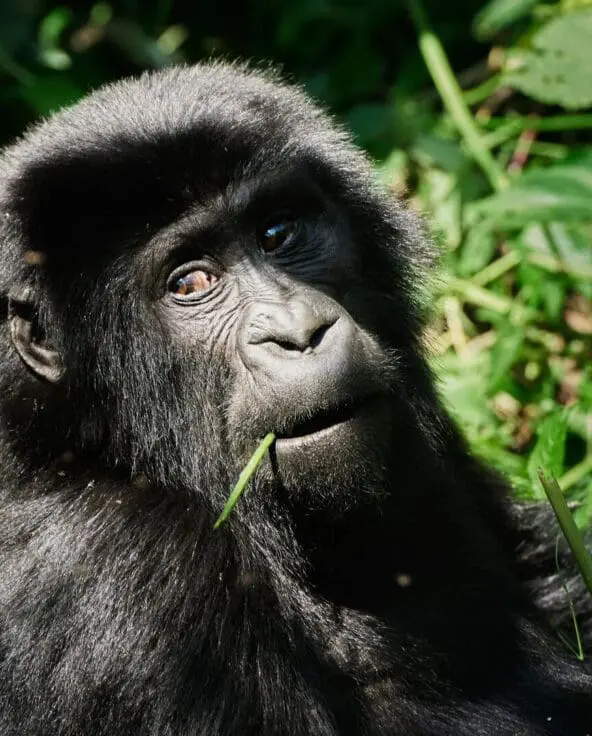
Chimpanzees During Rainfall
Chimpanzees respond differently to changing weather conditions.
In Kibale Forest National Park, light morning rain often encourages chimps to remain within accessible feeding areas before climbing higher into the forest canopy later in the day.
Visitors may hear their loud pant-hoots echoing across the rainforest long before seeing them.
Guides use these distinctive calls to help locate chimpanzee communities.
During light showers, chimpanzees sometimes shelter briefly beneath dense foliage before continuing their daily activities.
Watching them shake water from their fur, interact with one another, and communicate through expressive vocalizations becomes one of the highlights of a rainy-season trek.
Many visitors describe this as one of the most fascinating wildlife behaviors they have ever observed.
Story from Bwindi: A Rainy Morning That Became Perfect
Mark and Jennifer traveled from Australia hoping to see Uganda’s famous mountain gorillas.
When they woke on trekking morning, heavy clouds covered the surrounding mountains.
Soon afterward, steady rain began falling.
Initially disappointed, they wondered whether their trek would even continue.
Their Chimps and Gorillas guide smiled and simply said,
“This is a rainforest. Today you’ll see it at its best.”
The group entered the forest wearing waterproof jackets and sturdy hiking boots.
Every leaf sparkled.
Fresh animal tracks appeared in the soft soil.
Tiny waterfalls flowed beside the trail.
Within two hours, the trackers located the gorilla family.
The silverback sat calmly feeding on wild celery while nearby juveniles chased one another through dripping vegetation.
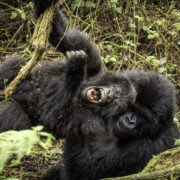
An infant repeatedly climbed onto its mother’s back before sliding playfully into the wet grass.
Jennifer later wrote:
“I had worried about getting wet. Instead, I completely forgot the rain. The forest felt alive, and the gorillas looked completely at home. It was one of the most beautiful experiences of our lives.”
Her story has since inspired many future travelers considering a rainy-season safari.
A Different Kind of Adventure
Rain adds an element of exploration that many travelers never expect.
Instead of dusty hiking trails, visitors walk through vibrant green landscapes bursting with life.
Wild orchids bloom beside narrow paths.
Colorful mushrooms appear on fallen logs.
Butterflies gather near puddles.
Forest streams become crystal clear after rainfall.
The sounds of dripping leaves mix with distant bird calls and the occasional rustle of wildlife moving through thick vegetation.
Unlike dry-season trekking, where sunlight often creates harsh shadows for photography, cloudy conditions produce soft natural lighting that many photographers actually prefer.
Portraits of gorillas and chimpanzees appear richer, more detailed, and free from excessive contrast.
Emotional Moments in the Rainforest
Every Trekking in the Rain Experience creates unforgettable memories because rain heightens every emotion.
Visitors often become completely immersed in the environment.
The cool mountain air.
The scent of fresh vegetation.
The quiet concentration of trackers.
The anticipation with every step.
Then, suddenly, the forest opens.
A family of mountain gorillas appears only a few meters away.
Rain gently falls through the trees as a silverback calmly watches over his family.
Young gorillas continue playing without concern.
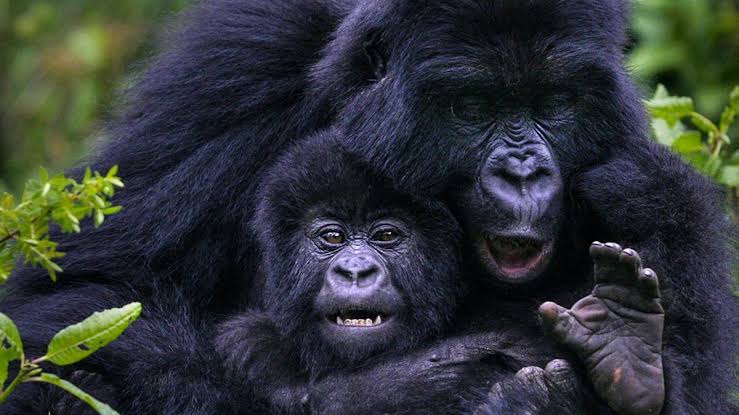
Mothers groom their infants beneath broad leaves.
Time seems to slow.
Many visitors later admit that they never noticed the rain during the one-hour encounter.
Their attention remained entirely focused on the gorillas.
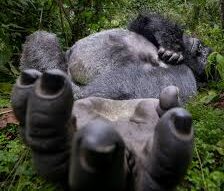
gorilla hand
Wildlife Beyond the Primates
Rain also increases opportunities to appreciate the rainforest’s remarkable biodiversity.
Along the trail, guests frequently encounter:
- Great blue turacos gliding through the canopy.
- Black-and-white colobus monkeys leaping between trees.
- L’Hoest’s monkeys foraging quietly.
- Colorful chameleons resting on branches.
- Bright tree frogs near small streams.
- Giant forest squirrels.
- Hundreds of butterfly species.
- Unique rainforest flowers blooming after showers.
Experienced Chimps and Gorillas guides explain how rainfall supports this incredible diversity, helping visitors understand why Uganda’s forests remain among Africa’s most important conservation areas.
The Role of Expert Guides
A successful rainy-season trek depends greatly on experienced guides.
Chimps and Gorillas works with knowledgeable local professionals who understand changing trail conditions, wildlife behavior, and visitor safety.
Throughout the hike they assist guests by:
- Selecting the safest routes.
- Adjusting the pace for varying fitness levels.
- Explaining rainforest ecology.
- Identifying wildlife signs.
- Sharing fascinating facts about gorilla and chimpanzee behavior.
- Ensuring visitors remain comfortable throughout the trek.
Their experience allows guests to enjoy every moment regardless of changing weather conditions.
Why More Travelers Are Choosing Rainy-Season Safaris
As sustainable tourism continues to grow, more experienced wildlife enthusiasts are discovering the advantages of traveling outside peak seasons.
Some of the benefits include:
- Fewer trekking groups.
- Greater availability of permits.
- More personalized wildlife experiences.
- Exceptionally green landscapes.
- Cooler hiking temperatures.
- Beautiful photography conditions.
- Peaceful forest atmosphere.
- Better opportunities to appreciate the rainforest ecosystem.
Many Chimps and Gorillas Reviews mention that what initially seemed like challenging weather ultimately became one of the highlights of the safari.
Visitors return home with stories that are entirely different from those of travelers who visited during the dry season.
Their photographs often feature dramatic mist, vibrant green vegetation, and intimate wildlife encounters that perfectly capture the magic of Uganda’s rainforests.
If you have ever wondered whether rain should discourage your safari plans, the answer from countless experienced travelers is simple:
Absolutely not.
A Trekking in the Rain Experience may become the most unforgettable wildlife adventure you will ever have.
When Rain Becomes Part of the Adventure
The most memorable wildlife experiences are rarely those that unfold exactly as expected. In Uganda’s tropical rainforests, rain is not an obstacle to overcome but an essential part of the ecosystem that sustains mountain gorillas, chimpanzees, and thousands of other species. Visitors who embrace a Trekking in the Rain Experience often return home with stories that are richer, more authentic, and deeply personal.
Chimps and Gorillas encourages travelers to view the rainforest as it truly is—a living, breathing environment where changing weather creates new opportunities for discovery. A light morning shower can transform an ordinary forest into a spectacular landscape of emerald-green vegetation, crystal-clear streams, and drifting mountain mist.
For many guests, this is the Uganda they had always imagined.
Following Chimpanzees Through Kibale Forest
Kibale Forest National Park is often referred to as the primate capital of East Africa, home to one of the largest populations of wild chimpanzees on the continent. During rainy conditions, the forest becomes especially vibrant, with towering fig trees, thick undergrowth, and countless shades of green stretching in every direction.
A typical morning begins with a briefing from Uganda Wildlife Authority rangers before entering the forest alongside experienced trackers.
Within minutes, the sounds of civilization disappear.
Instead, visitors hear:
- Chimpanzees calling from distant treetops.
- Birds singing through the canopy.
- Water dripping from giant leaves.
- Insects humming beneath the forest floor.
- Branches swaying high above.
These sounds guide the trackers toward one of Kibale’s habituated chimpanzee communities.
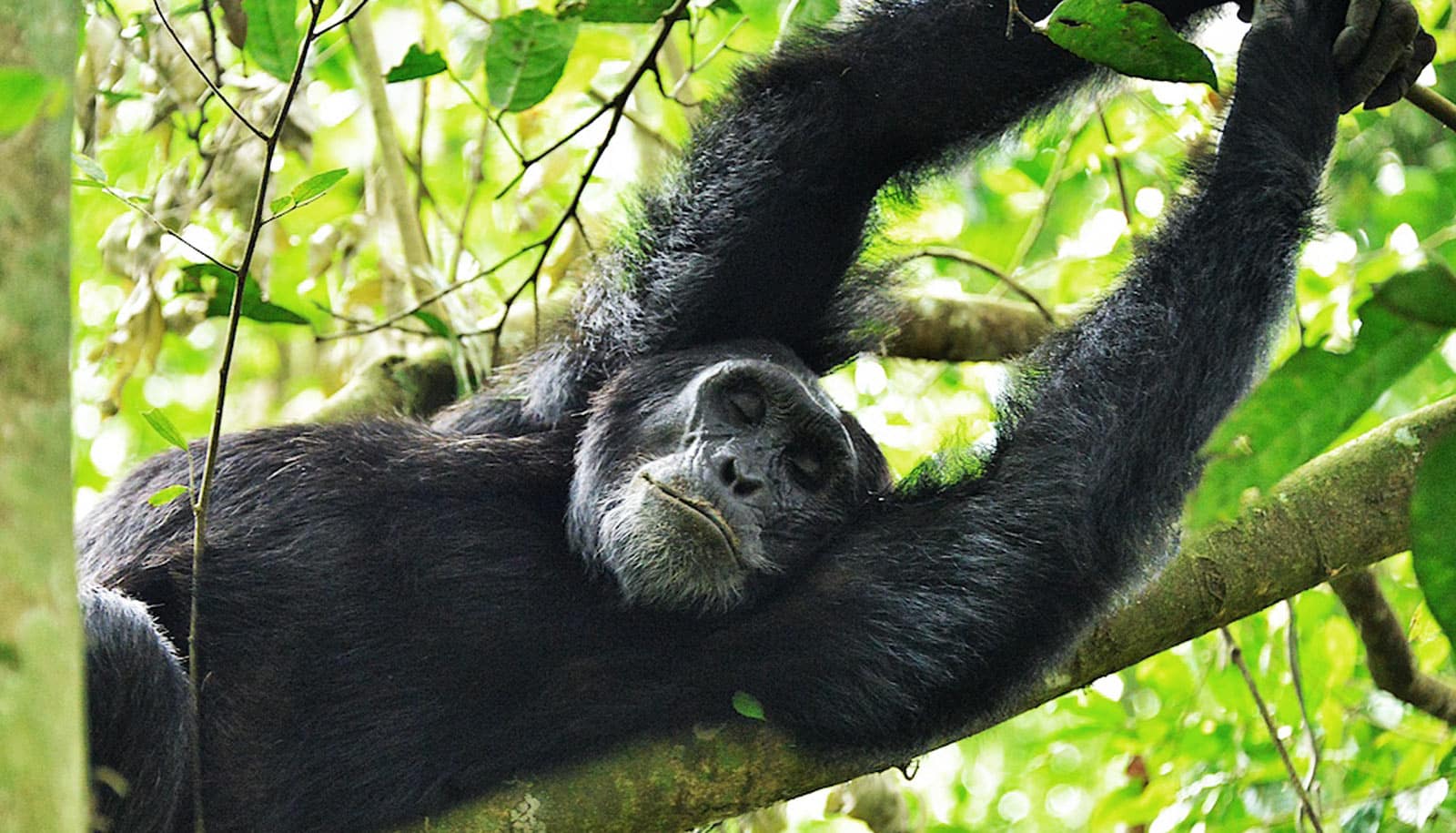
Unlike gorillas, chimpanzees move quickly through the forest. They leap effortlessly between branches, climb towering trees, and communicate through loud pant-hoots, screams, and playful chatter.
Rain often makes these encounters even more dramatic.
Visitors watch chimpanzees pause briefly beneath dense foliage before continuing their daily routines, seemingly unaffected by the weather.
A Morning with the Kanyanchu Community
One Chimps and Gorillas group visited Kibale shortly after an overnight rainfall.
The forest floor remained damp while sunlight slowly filtered through the canopy.
Their guide suddenly stopped and pointed upward.
Nearly twenty chimpanzees were feeding in a massive fruiting fig tree.
Young chimps chased one another from branch to branch while older individuals carefully selected ripe fruit.
A dominant male loudly called across the forest, and within moments, more members of the community appeared.
Guests stood quietly below, completely surrounded by wildlife.
One traveler later wrote,
“I expected to see chimpanzees. I never imagined hearing an entire forest come alive around them.”
Experiences like these frequently appear in Chimps and Gorillas Reviews because they highlight the remarkable diversity of Uganda’s rainforests.
Meeting Mountain Gorillas in the Mist
If chimpanzees bring energy and excitement to the rainforest, mountain gorillas bring peace and quiet.
Rainy mornings in Bwindi Impenetrable National Park often begin with thick mist hanging over the valleys.
As trekking groups climb deeper into the forest, visibility changes constantly.
One moment the trees appear crystal clear.
The next, drifting clouds gently surround the trail.
This changing scenery creates an atmosphere unlike anywhere else in Africa.
Eventually, the guide raises a hand.
Everyone stops.
Just ahead, movement appears among the leaves.
A juvenile gorilla swings from a vine before disappearing behind dense vegetation.
Nearby, a mother carefully cradles her infant.
The silverback remains seated, calmly feeding while occasionally observing his family.
Rain continues falling softly through the canopy.
Visitors frequently describe this as the most peaceful moment of their safari.
Story from the Rushaga Sector
Emily had worried for weeks about trekking during Uganda’s rainy season.
Friends suggested postponing her trip until the dry months.
Instead, she trusted the advice of Chimps and Gorillas and kept her original travel dates.
Her gorilla trek began beneath cloudy skies.
Within an hour, steady rain covered the forest.
Mud made the trail more challenging, but the guides carefully assisted everyone through difficult sections.
When the group finally located the gorillas, Emily forgot entirely about the weather.
The family remained relaxed, feeding quietly among giant ferns.
Rain collected on broad leaves before falling gently around the animals.
The silverback occasionally looked toward the visitors before returning to his meal.
“It felt like stepping into a wildlife documentary,” Emily later explained.
“The rain actually made everything more beautiful.”
Her photographs captured mist-covered trees, rich green vegetation, and gorillas surrounded by sparkling raindrops—images that later became her favorite memories of Uganda.
Rain Creates Incredible Photography
Professional photographers often recommend overcast conditions for wildlife photography.
Bright sunlight can create harsh shadows and excessive contrast, especially beneath dense forest canopies.
Rainy conditions provide:
- Soft natural lighting.
- Richer green colors.
- Better detail in animal fur.
- Dramatic misty backgrounds.
- Clear reflections on leaves.
- Enhanced atmosphere.
- Even exposure throughout the forest.
Mountain gorillas photographed against mist-covered vegetation create striking images that perfectly represent Uganda’s ancient rainforests.
Chimpanzees framed by towering fig trees and glistening branches produce equally captivating photographs.
Many award-winning wildlife images have been captured during rainy-season treks.
Preparing for Wet Conditions
Proper preparation ensures that a Trekking in the Rain Experience remains enjoyable from beginning to end.
Chimps and Gorillas provides guests with practical guidance before arrival so they know exactly what to bring.
Essential equipment includes:
- Waterproof hiking boots with strong grip.
- Lightweight waterproof jacket.
- Long hiking trousers.
- Moisture-wicking shirts.
- Gardening gloves for holding vegetation.
- Waterproof backpack cover.
- Dry bags for cameras and electronics.
- Reusable water bottle.
- Energy snacks.
- Trekking socks.
- Insect repellent.
- Small towel.
Even during the rainy season, temperatures remain comfortable for hiking because Uganda’s high-altitude forests enjoy a mild climate throughout much of the year.
The Importance of Hiring a Porter
One recommendation appears repeatedly in Chimps and Gorillas Reviews.
Hire a porter.
Porters provide invaluable assistance by carrying backpacks, offering support on steep or muddy trails, and helping guests navigate difficult sections safely.
Their local knowledge and encouragement often make the trek considerably easier.
Equally important, hiring a porter directly supports local families and strengthens community participation in conservation tourism.
Many visitors later say their porter became one of the most memorable people they met during the safari.
Accommodation After a Rainy Trek
Returning to a comfortable lodge after several hours in the rainforest becomes especially rewarding.
Chimps and Gorillas partners with carefully selected lodges near Bwindi and Kibale that provide both comfort and authentic forest surroundings.
Guests can look forward to:
- Warm showers.
- Comfortable ensuite rooms.
- Freshly prepared local and international cuisine.
- Fireplaces during cool evenings.
- Spectacular rainforest views.
- Friendly hospitality.
- Peaceful gardens filled with birds.
As evening mist settles over the mountains, guests often gather around the fireplace, exchanging stories from the day’s adventure while enjoying locally grown Ugandan coffee or tea.
These conversations become treasured memories in themselves.
Practical Travel Information
Planning ahead helps ensure a smooth and rewarding safari.
Best Months
Rainfall can occur at any time in Uganda’s tropical forests, but the wetter months generally fall between March and May and again from October to November.
These periods often offer fewer visitors and lush scenery.
Fitness
A moderate level of physical fitness is recommended.
Trails may include steep climbs, muddy paths, and uneven terrain.
Permits
Gorilla and chimpanzee permits should be booked well in advance, particularly if your travel dates fall during popular holiday periods.
Chimps and Gorillas arranges all permits as part of your safari package.
Estimated Costs
The overall cost of a gorilla and chimpanzee safari depends on:
- Gorilla permit fees.
- Chimpanzee tracking permits.
- Accommodation category.
- Transportation.
- Number of travel days.
- Optional cultural activities.
- Additional national parks included in the itinerary.
Customized packages allow travelers to select experiences that match their budget while maintaining high standards of comfort and service.
Why Rain Reveals Uganda at Its Best
Some destinations are best explored beneath clear blue skies.
Uganda’s rainforests are different.
Rain nourishes every tree, stream, flower, and animal that visitors come to admire.
Without rainfall, Bwindi and Kibale would not support the incredible biodiversity that makes them globally significant conservation areas.
Visitors who embrace the weather often discover that the rain becomes one of the most memorable parts of the journey.
The scent of wet earth.
The cool mountain air.
The sound of droplets falling through towering trees.
The quiet confidence of a silverback sitting calmly beneath the forest canopy.
The excitement of chimpanzees calling across the rainforest.
These moments cannot be recreated elsewhere.
They are uniquely Ugandan.
If you are looking for an authentic wildlife adventure filled with breathtaking scenery and unforgettable encounters,
A 6-Day Gorilla and Chimpanzee Trekking in the Rain Experience Itinerary
A well-planned itinerary allows you to experience Uganda’s lush rainforests at a comfortable pace while maximizing your chances of unforgettable primate encounters. This six-day safari combines chimpanzee tracking in Kibale Forest with mountain gorilla trekking in Bwindi Impenetrable National Park, along with scenic landscapes and cultural experiences.
Day 1: Arrival at Entebbe International Airport
Your adventure begins upon arrival at Entebbe International Airport, where a professional Chimps and Gorillas guide welcomes you to Uganda, often called the “Pearl of Africa.”
Depending on your arrival time, enjoy a short city tour of Entebbe, relax along the shores of Lake Victoria, or simply unwind at your hotel after your international flight.
Your guide provides a complete safari briefing, reviews your itinerary, and answers questions about chimpanzee tracking, gorilla trekking, packing, and weather conditions.
Highlights
- Airport pick-up
- Safari briefing
- Overnight stay in Entebbe
- Preparation for the primate safari
Meals: Dinner (depending on arrival time)
Day 2: Transfer to Kibale Forest National Park
After breakfast, begin your scenic drive west toward Kibale Forest National Park.
The journey passes tea plantations, rolling hills, traditional villages, and beautiful crater lakes. Along the way, your guide introduces Uganda’s diverse cultures, wildlife, and conservation efforts.
As you approach Kibale, the landscape becomes increasingly green, with tropical forests stretching across the hillsides.
After checking into your lodge, enjoy a relaxing evening surrounded by forest sounds.
Driving time: Approximately 5–6 hours.
Meals: Breakfast, lunch, and dinner.
Day 3: Chimpanzee Tracking and Bigodi Wetland Sanctuary
After an early breakfast, head to the Kanyanchu Visitor Centre for a briefing by Uganda Wildlife Authority rangers.
Your Trekking in the Rain Experience begins as you enter one of Africa’s richest tropical forests.
Whether light rain falls or morning mist covers the trees, the rainforest feels vibrant and alive.
Trackers lead the group through dense vegetation while listening for chimpanzee vocalizations.
Soon, loud pant-hoots echo across the forest.
Within minutes, you locate a habituated chimpanzee community.
For one unforgettable hour, watch them:
- Feed on ripe fruits.
- Swing effortlessly through towering trees.
- Groom one another.
- Care for infants.
- Communicate through expressive calls.
After lunch, visit Bigodi Wetland Sanctuary, famous for its birds, monkeys, butterflies, and community conservation initiatives.
Meals: Breakfast, lunch, and dinner.
Day 4: Transfer to Bwindi Impenetrable National Park
Following breakfast, travel through southwestern Uganda toward Bwindi.
This scenic drive showcases terraced hillsides, tea plantations, traditional farming communities, and breathtaking mountain scenery.
Frequent photo stops allow you to appreciate Uganda’s spectacular countryside.
Arrive at your forest lodge during the afternoon.
As evening mist settles over Bwindi, your anticipation for tomorrow’s gorilla trek continues to build.
Driving time: Approximately 6–7 hours.
Meals: Breakfast, lunch, and dinner.
Day 5: Mountain Gorilla Trekking
Today is the highlight of your safari.
Following breakfast, proceed to the Uganda Wildlife Authority headquarters for registration and a detailed briefing.
Small groups are assigned to different habituated gorilla families.
Your experienced ranger guide leads you into the rainforest.
The trail winds through giant ferns, bamboo, ancient trees, and moss-covered vegetation.
Light rain begins falling.
Instead of spoiling the adventure, it enhances every moment.
The scent of wet earth fills the forest.
Birdsong echoes through the canopy.
Mist drifts between towering trees.
Then the guide quietly whispers,
“They’re here.”
Just ahead sits a magnificent silverback.
Nearby, juveniles tumble through the vegetation while mothers patiently groom their infants.
For one magical hour, observe the family as they feed, rest, and interact naturally.
Many visitors describe this as one of the most emotional wildlife encounters of their lives.
After the trek, receive your official Gorilla Trekking Certificate before returning to the lodge.
Spend the evening celebrating your achievement.
Meals: Breakfast, packed lunch, and dinner.
Day 6: Return to Entebbe and Departure
After breakfast, begin the return journey to Entebbe.
Depending on your flight schedule, stop at the Uganda Equator for photographs, souvenir shopping, and lunch.
Your guide transfers you to Entebbe International Airport for your departure flight, marking the end of an unforgettable primate safari.
Meals: Breakfast and lunch.
Practical Travel Information
Planning ahead ensures your Trekking in the Rain Experience is enjoyable regardless of the weather.
Estimated Safari Costs
The total cost varies depending on:
- Gorilla trekking permit.
- Chimpanzee tracking permit.
- Accommodation category.
- Transportation.
- Number of travelers.
- Seasonal availability.
- Optional cultural experiences.
Chimps and Gorillas offers customized itineraries ranging from budget-friendly adventures to luxury safaris, ensuring every traveler finds a package suited to their preferences.
Best Time to Travel
Although this safari can be enjoyed throughout the year, many experienced travelers recommend the rainy seasons because they offer:
- Fewer visitors.
- Greener landscapes.
- Cooler hiking temperatures.
- Outstanding photography conditions.
- A more immersive rainforest atmosphere.
Even during the drier months, brief showers are common in tropical rainforests, making waterproof gear essential year-round.
Health and Fitness
A moderate level of fitness is recommended.
Trails may include:
- Steep slopes.
- Muddy paths.
- Dense vegetation.
- Uneven terrain.
- River crossings.
Hiring a porter is highly recommended for additional support and to contribute directly to local community livelihoods.
Why Book with Chimps and Gorillas?
Chimps and Gorillas specializes in tailor-made gorilla and chimpanzee safaris across Uganda.
Guests consistently praise the company for:
- Personalized itineraries.
- Professional safari guides.
- Excellent communication.
- Comfortable transportation.
- Carefully selected accommodations.
- Reliable permit arrangements.
- Flexible travel planning.
- Outstanding customer service.
Many positive Chimps and Gorillas Reviews highlight not only successful wildlife encounters but also the genuine hospitality and local knowledge that make each safari unique.
Whether you are traveling solo, as a couple, with friends, or as a family, Chimps and Gorillas ensures every detail is professionally managed from arrival to departure.
Conclusion
A Trekking in the Rain Experience is far more than a hike through a wet forest—it is an opportunity to witness Uganda’s rainforests in their purest and most vibrant form. Rain nourishes the habitats that support endangered mountain gorillas, lively chimpanzees, and an extraordinary diversity of birds, butterflies, and forest wildlife. Rather than diminishing the adventure, rainfall enhances it, creating dramatic mist-covered landscapes, refreshing hiking conditions, and exceptional wildlife photography opportunities.
Whether you are quietly observing a silverback leading his family through Bwindi Impenetrable National Park or listening to the energetic calls of chimpanzees echoing through Kibale Forest, every moment becomes part of a lifelong memory. Countless travelers who once worried about rainy weather later describe it as the very reason their safari felt authentic and unforgettable.
With expert planning, experienced local guides, and carefully crafted itineraries, Chimps and Gorillas transforms every journey into an inspiring wildlife adventure. From securing permits and selecting quality accommodations to providing knowledgeable guides and personalized service, every detail is designed to ensure a safe, comfortable, and memorable experience.
Frequently Asked Questions
Is trekking in the rain safe?
Yes. Gorilla and chimpanzee trekking continue during light and moderate rain. Experienced Uganda Wildlife Authority rangers prioritize visitor safety, and Chimps and Gorillas provides pre-departure guidance on suitable clothing and equipment.
Does rain reduce the chances of seeing gorillas or chimpanzees?
No. Mountain gorillas remain active throughout the day, while chimpanzees continue feeding and moving through the forest. Experienced trackers locate habituated groups before visitors begin their trek.
What should I wear for rainy-season trekking?
Wear waterproof hiking boots, a lightweight rain jacket, long-sleeved clothing, long trousers, gardening gloves, moisture-wicking layers, and carry a waterproof cover for your backpack and camera.
Is the trek more difficult during the rainy season?
Trails may become muddier and more slippery, but experienced guides adjust the pace to suit the group. Hiring a porter is highly recommended for extra support on challenging sections.
Can I combine gorilla trekking and chimpanzee tracking in one safari?
Yes. Chimps and Gorillas offers customized itineraries that combine Bwindi Impenetrable National Park and Kibale Forest National Park, allowing visitors to experience both mountain gorillas and chimpanzees in a single trip.
How many days do I need for this safari?
A 6-day itinerary is ideal for combining gorilla trekking, chimpanzee tracking, scenic drives, and cultural experiences. Longer itineraries can include destinations such as Queen Elizabeth National Park, Lake Bunyonyi, or Murchison Falls National Park.
When should I book my permits?
It is recommended to reserve gorilla permits several months in advance, particularly for travel during the peak seasons. Chimps and Gorillas manages all permit arrangements on behalf of its guests.
Why choose Chimps and Gorillas?
Chimps and Gorillas offers expert local guides, personalized itineraries, seamless logistics, quality accommodations, dependable transportation, and exceptional customer service. The company is committed to responsible tourism and creating unforgettable gorilla and chimpanzee experiences in Uganda.
Final Thoughts
Some of the world’s greatest wildlife experiences happen when nature is completely untouched. A Trekking in the Rain Experience offers exactly that—a chance to explore Uganda’s ancient rainforests as they have existed for thousands of years. Every raindrop nourishes the lush vegetation that sustains endangered mountain gorillas, playful chimpanzees, colorful birds, and countless other species, making each trek an authentic journey into one of Africa’s richest ecosystems.
While many travelers initially hope for sunshine, those who embrace the rain often return with the most remarkable stories. The mist drifting through Bwindi Impenetrable National Park, the fresh scent of Kibale Forest after a morning shower, the gentle sound of rain falling through the canopy, and the unforgettable sight of a silverback calmly watching over his family create memories that remain vivid long after the safari has ended.
Rain also reveals the resilience of Uganda’s wildlife. Mountain gorillas continue feeding peacefully despite the showers, while chimpanzees leap confidently through the treetops, reminding visitors that this rainforest is their natural home. These intimate moments allow travelers to witness authentic animal behavior in an environment that feels wild, peaceful, and untouched.
Beyond the incredible wildlife encounters, trekking during the rainy season contributes to conservation. Gorilla and chimpanzee permit fees support habitat protection, ranger patrols, veterinary care, scientific research, and community development projects surrounding Uganda’s protected areas. By choosing a responsible safari, every traveler becomes part of the ongoing effort to safeguard these endangered primates for future generations.
Whether you dream of photographing mountain gorillas emerging from the mist, listening to chimpanzees calling through Kibale Forest, or simply immersing yourself in one of the world’s oldest rainforests, Uganda promises an adventure unlike any other.
With Chimps and Gorillas ,every safari is thoughtfully designed to provide comfort, safety, expert guidance, and unforgettable wildlife encounters. From securing permits and arranging accommodations to creating personalized itineraries, every detail is managed with professionalism and care, allowing you to focus on the experience itself.
If you are seeking a safari that combines breathtaking scenery, incredible primates, meaningful conservation, and authentic African hospitality, there has never been a better time to visit Uganda.
Plan Your Safari with Chimps and Gorillas and experience the magic of Uganda’s rainforests in every season.
Request Itinerary today, and let our experienced safari specialists create a personalized gorilla and chimpanzee adventure tailored to your travel dates, interests, and budget.
Contact Chimps and Gorillas
Website: https://www.chimpsandgorillas.com
Email: info@chimpsandgorillas.com
WhatsApp: +256 774 532 841
Your unforgettable Trekking in the Rain Experience begins with a single step into Uganda’s rainforest—where every trail leads to extraordinary encounters, every shower breathes life into the forest, and every moment becomes a story worth sharing.
If you are ready to discover Uganda’s extraordinary primates in one of the world’s most beautiful rainforest ecosystems, now is the perfect time to Plan Your Safari with Chimps and Gorillas.
Need a personalized package? Request Itinerary, and our safari specialists will create a custom gorilla and chimpanzee adventure based on your travel dates, interests, and budget.
Request Quote
Popular Trips
Rwanda
- 1 Day Rwanda Gorilla Trek
- 2 Day Akagera Safari from Kigali
- 2 Day Gorilla Trek Rwanda
- 3 Day Akagera National Park Safari
- 3 Day Gorilla Trekking Rwanda
- 4 Day Rwanda Gorilla Safari
- 5 Day Rwanda Gorilla and Golden Monkey
- 6 Day Rwanda Primates Safari
- 7 Day Rwanda Wildlife and Gorilla Safari
- 8 Day Classic Rwanda Safari Tour
Uganda
- 10 Day Uganda Safari Tour
- 12 Day Uganda Gorilla and Wildlife Safari
- 3 Day Gorilla Trekking Uganda
- 3 Day Gorilla Trekking Uganda from Kigali
- 3 Day Murchison Falls Safari
- 5 Day Gorilla and Chimpanzee Safari Uganda
- 5 Days Gorilla and wildlife safari
- 6 Days Gorilla, Chimps and Wildlife safari
- 7 Day Uganda Wildlife Safari
- 8 Days Uganda Safari
Recent Posts

6-Day Lifestyle Safari Itinerary

Common Safari Mistakes to Avoid in Uganda