Bwindi Gorilla Families Stories: Inside Uganda’s Mountain Gorilla Groups
Bwindi gorilla families stories reveal the intimate and emotional lives of mountain gorillas living in one of Africa’s most ancient rainforests. Deep in southwestern Uganda, these families thrive in the dense vegetation of Bwindi, where each group has its own unique structure, personality, and social dynamics.
These stories are not just about wildlife observation—they are about understanding relationships, leadership, survival, and emotional connection within gorilla communities.
Located in the heart of Uganda’s conservation landscape, Bwindi offers one of the most extraordinary opportunities to witness these families in their natural environment.
Life Inside Bwindi Forest
The story of Bwindi gorilla families begins in the dense and misty wilderness of Bwindi Impenetrable National Park.
This ancient rainforest is home to nearly half of the world’s remaining mountain gorillas. The forest is thick, humid, and filled with biodiversity, making it an ideal habitat for gorilla survival.
Each gorilla family moves through different parts of the forest daily, searching for food such as leaves, fruits, and bamboo shoots. Their movement patterns are influenced by seasons and food availability.
The forest itself plays a central role in shaping their lives, offering both protection and challenges.
Structure of Gorilla Families
Bwindi gorilla families stories often highlight the complex social structure within each group.
At the center of every family is the silverback, the dominant male responsible for leadership and protection. He makes decisions about movement, feeding areas, and safety.
Females form strong bonds within the group and are responsible for caring for infants. Juveniles add energy and playfulness to the family dynamic.
In Mgahinga Gorilla National Park, similar family structures exist, though Bwindi hosts a larger number of gorilla groups.
The Role of the Silverback
The silverback is the most important figure in Bwindi gorilla families stories. He is the protector, leader, and decision-maker of the group.
Despite his strength and size, he is often calm and gentle with his family. His role includes mediating conflicts, protecting against threats, and guiding the group through the forest.
When danger arises, the silverback stands his ground, ensuring the safety of all members. His presence brings stability and order to the family structure.
Mother-Infant Relationships
One of the most emotional aspects of Bwindi gorilla families stories is the bond between mothers and their infants.
Mother gorillas are extremely nurturing. They carry their babies, protect them from danger, and teach them essential survival skills.
Infants remain close to their mothers for several years, learning social behavior and group dynamics.
These relationships are often the most touching moments observed by visitors in Bwindi Impenetrable National Park.
Playful Behavior of Young Gorillas
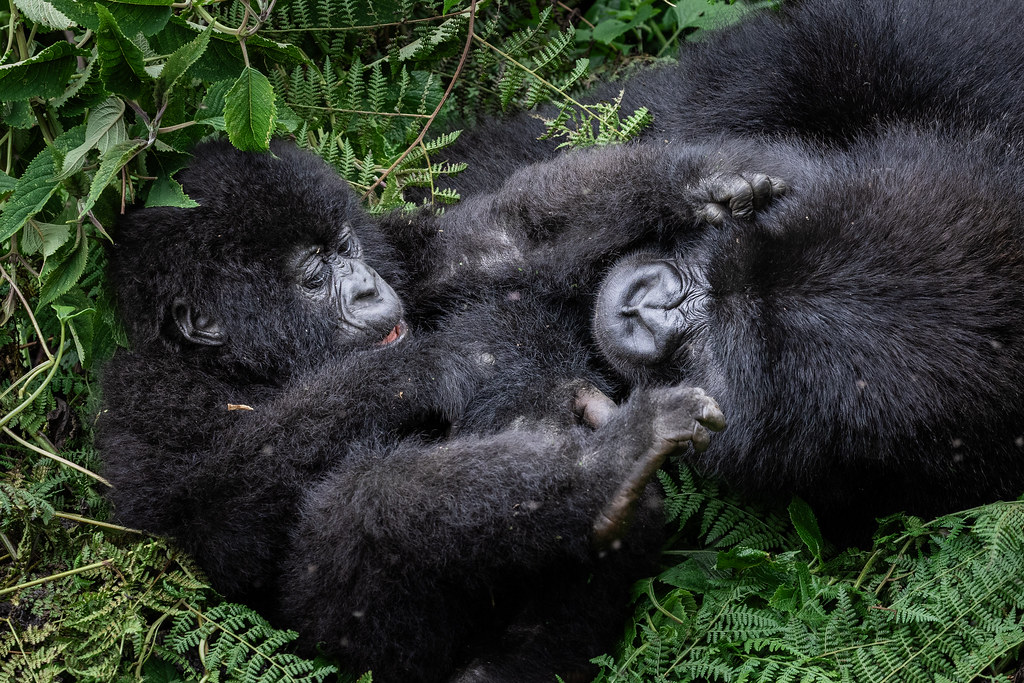
Juvenile gorillas bring energy and curiosity to the family. They spend much of their time playing, climbing trees, and interacting with each other.
These playful moments are essential for their development, helping them build strength and social skills.
Bwindi gorilla families stories often highlight these playful interactions as some of the most heartwarming scenes in the forest.
They also help visitors see the lighter, more human-like side of gorillas.
Feeding Habits and Daily Life
Gorilla families spend much of their day feeding. Their diet consists mainly of vegetation such as leaves, fruits, and stems.
Each family moves through the forest in search of fresh feeding grounds. The silverback leads these movements, ensuring the group stays safe and well-fed.
In Bwindi, food availability changes with altitude and season, influencing how far families travel each day.
Communication Within the Family
Communication plays a vital role in Bwindi gorilla families stories. Gorillas use vocalizations, body language, and facial expressions to interact.
Grunts, chest beats, and gestures help maintain order and express emotions such as excitement, warning, or reassurance.
This complex communication system strengthens social bonds and ensures coordination within the group.
Conservation Efforts in Bwindi
The survival of Bwindi gorilla families depends heavily on conservation efforts.
The Uganda Wildlife Authority manages the park and implements strict protection measures.
Rangers patrol the forest daily to prevent poaching and monitor gorilla health. Tourism revenue supports these efforts, making conservation sustainable.
Without these initiatives, gorilla populations would face serious threats from habitat loss and human activity.
Role of Eco-Tourism
Eco-tourism plays a key role in preserving Bwindi gorilla families stories for future generations.
Gorilla trekking permits generate income that directly funds conservation programs and community development.
Lodges near Bwindi Impenetrable National Park use sustainable practices such as solar energy, waste recycling, and local employment.
This ensures that tourism benefits both wildlife and surrounding communities.
Community Connection to Gorillas
Local communities are closely connected to gorilla conservation. Many residents near Bwindi work in tourism as guides, porters, and cultural performers.
Revenue-sharing programs support schools, healthcare facilities, and infrastructure development.
This creates a strong link between conservation success and community well-being, ensuring long-term protection of gorilla families.
Research and Monitoring
Scientific research is essential for understanding Bwindi gorilla families stories. Researchers track behavior, health, and population trends.
In Bwindi Impenetrable National Park, long-term monitoring helps conservationists identify threats and improve protection strategies.
This research provides valuable insights into gorilla life and supports global conservation efforts.
Challenges Facing Gorilla Families
Despite strong protection, gorilla families face ongoing challenges. Habitat fragmentation, climate change, and human encroachment remain threats.
Disease transmission is another concern due to close genetic similarity between humans and gorillas.
Strict regulations and continuous monitoring are necessary to reduce these risks.
Emotional Connection for Visitors
Visitors who experience Bwindi gorilla families stories often describe deep emotional connections.
Observing gorilla behavior in the wild creates a sense of respect and admiration.
Many travelers leave the forest with a renewed appreciation for wildlife and conservation.
Conclusion
Bwindi gorilla families stories offer a rare and powerful glimpse into the lives of mountain gorillas in their natural habitat. From silverback leadership to playful juveniles and strong maternal bonds, each family tells a unique story of survival and connection.
Thanks to strong conservation efforts and eco-tourism, these gorilla families continue to thrive in the forests of Bwindi. Their survival depends on continued protection and responsible tourism.
This blog belongs to Chimps and gorillas.com, sharing meaningful wildlife stories that highlight the importance of preserving Uganda’s incredible gorilla families for future generations.
Request Quote
Popular Trips
Rwanda
- 1 Day Rwanda Gorilla Trek
- 2 Day Akagera Safari from Kigali
- 2 Day Gorilla Trek Rwanda
- 3 Day Akagera National Park Safari
- 3 Day Gorilla Trekking Rwanda
- 4 Day Rwanda Gorilla Safari
- 5 Day Rwanda Gorilla and Golden Monkey
- 6 Day Rwanda Primates Safari
- 7 Day Rwanda Wildlife and Gorilla Safari
- 8 Day Classic Rwanda Safari Tour
Uganda
- 10 Day Uganda Safari Tour
- 12 Day Uganda Gorilla and Wildlife Safari
- 3 Day Gorilla Trekking Uganda
- 3 Day Gorilla Trekking Uganda from Kigali
- 3 Day Murchison Falls Safari
- 5 Day Gorilla and Chimpanzee Safari Uganda
- 5 Days Gorilla and wildlife safari
- 6 Days Gorilla, Chimps and Wildlife safari
- 7 Day Uganda Wildlife Safari
- 8 Days Uganda Safari
Recent Posts

6-Day Lifestyle Safari Itinerary

Common Safari Mistakes to Avoid in Uganda