Anti-Poaching Efforts in Uganda: Protecting Gorillas and Chimps
Anti-Poaching Efforts in Uganda: Protecting Gorillas, Chimpanzees and Africa’s Wildlife Heritage
Uganda is internationally recognized as one of Africa’s most remarkable wildlife destinations, home to endangered mountain gorillas, intelligent chimpanzees, elephants, lions, giraffes, rare birds, and countless other species that depend on protected habitats. However, the survival of these animals has not happened by chance. Behind every successful wildlife encounter lies decades of dedication, sacrifice, and collaboration through Anti-Poaching Efforts in Uganda.
For travelers who visit Uganda’s national parks and forests, the experience often feels magical. Standing quietly in Bwindi Impenetrable National Park while a silverback gorilla watches from the forest shadows, or observing chimpanzees communicate high in the ancient trees of Kibale Forest, creates memories that last a lifetime.
Yet these extraordinary moments exist because conservation teams work every day to protect wildlife from threats such as illegal hunting, habitat destruction, wildlife trafficking, and human-wildlife conflict.
The story of Uganda’s conservation success is not only about protecting animals. It is about protecting ecosystems, supporting local communities, preserving natural heritage, and ensuring future generations can experience the same wilderness that inspires today’s travelers.
Through carefully managed tourism, strong law enforcement, community involvement, and international partnerships, Uganda has developed one of East Africa’s most inspiring conservation models.
Organizations such as the Uganda Wildlife Authority, the Uganda Tourism Board, the International Gorilla Conservation Programme, the Dian Fossey Gorilla Fund, and the UNESCO World Heritage Centre have contributed significantly to protecting Uganda’s natural treasures.
For international travelers, choosing a safari in Uganda is more than a holiday. It is an opportunity to support conservation efforts directly. Every gorilla permit purchased, every responsible safari booked, and every visit to a protected area contributes toward safeguarding wildlife.
This guide explores how Uganda fights poaching, protects endangered species, empowers communities, and creates unforgettable conservation-focused safari experiences with Chimps and Gorillas.
Understanding the Threats Facing Uganda’s Wildlife
Wildlife conservation in Uganda has faced many challenges over the years. Like many African countries, Uganda has experienced periods where wildlife populations were severely affected by illegal hunting, habitat loss, and uncontrolled exploitation of natural resources.
During past decades, species such as rhinos disappeared from Uganda’s wilderness because of intensive poaching. Elephant populations also suffered significant declines due to demand for ivory. Large predators and other wildlife faced pressure from expanding human settlements and illegal activities.
However, Uganda’s conservation journey demonstrates that wildlife decline can be reversed when governments, communities, conservation organizations, and travelers work together.
Modern Anti-Poaching Efforts in Uganda combine technology, ranger protection, community education, scientific monitoring, and sustainable tourism.
Today, protected areas operate under stronger security systems, with trained conservation teams working continuously to monitor wildlife populations and respond to threats.
Rangers: The Frontline Heroes Protecting Uganda’s Wildlife
Behind every successful wildlife encounter is a team of dedicated conservation professionals.
Uganda’s wildlife rangers are often the first line of defense against poaching. They patrol forests, savannahs, wetlands, and remote wilderness areas where endangered species live.
Their work requires courage, commitment, and deep knowledge of nature.
In places like Bwindi Impenetrable National Park, rangers walk through challenging rainforest terrain searching for signs that help protect mountain gorilla families. They monitor gorilla movements, record health observations, remove illegal traps, and ensure visitors follow conservation guidelines.
Their work begins long before tourists arrive.
Before a visitor enters the forest hoping to meet a gorilla family, rangers have already spent countless hours tracking, protecting, and understanding these animals.
A silverback calmly resting beside his family represents more than a beautiful wildlife moment. It represents years of conservation dedication.
The same applies to chimpanzee protection in Kibale Forest National Park.
Chimpanzee communities require continuous monitoring because these intelligent primates depend on healthy forest ecosystems. Rangers and researchers study their behavior, protect their habitat, and respond to threats that could affect their survival.
Gorilla Conservation: Protecting Uganda’s Gentle Giants
Mountain gorillas are among the most endangered animals on Earth, and Uganda has become a global leader in their protection.
Bwindi Impenetrable National Park provides a safe home for many habituated gorilla families that visitors can experience through carefully controlled trekking programs.
The success of gorilla conservation is one of Africa’s greatest wildlife stories.
Decades ago, the future of mountain gorillas was uncertain. Hunting, habitat loss, and political challenges created enormous pressure on their populations.
Today, conservation partnerships and responsible tourism have helped create a more hopeful future.
Gorilla trekking is designed around strict conservation principles.
Only limited numbers of visitors are allowed to visit each gorilla family daily. This reduces stress on the animals while generating important funding for protection programs.
Visitors must follow rules including:
- Keeping a safe distance from gorillas
- Avoiding loud noises
- Never touching wild animals
- Following ranger instructions
- Respecting forest ecosystems
These rules ensure that tourism benefits rather than harms the animals.
The emotional impact of meeting gorillas is difficult to describe.
After trekking through thick rainforest vegetation, visitors often experience a powerful moment when they finally encounter a gorilla family.
A mother gently carrying her infant.
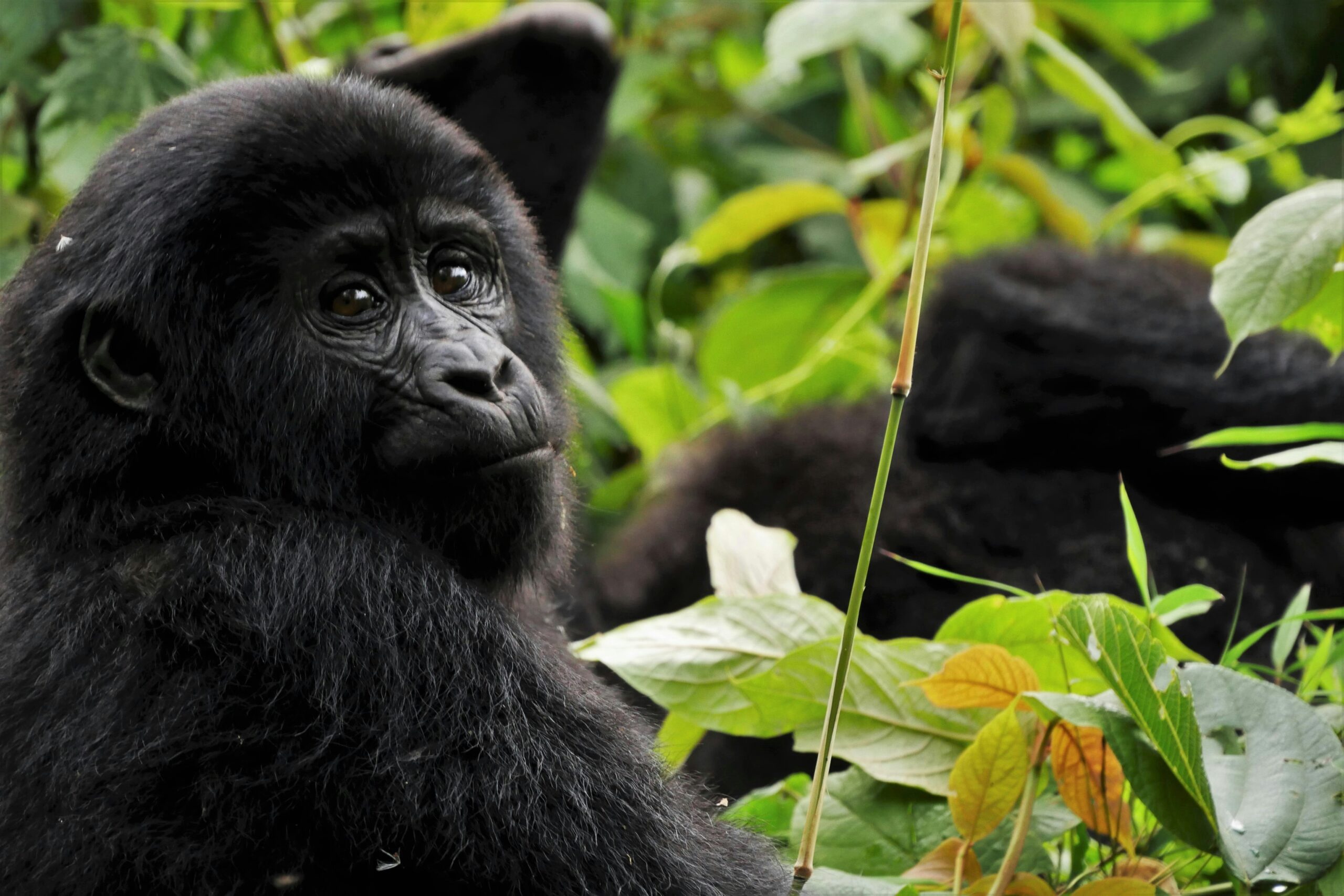
Young gorillas playfully rolling across the forest floor.
A silverback confidently protecting his family.
These moments remind travelers why conservation matters.
The encounter is not simply about seeing wildlife—it is about understanding why these animals deserve protection.
Chimpanzee Protection and Forest Conservation
While gorillas often receive worldwide attention, chimpanzees are equally important to Uganda’s conservation story.
Kibale Forest National Park protects one of Africa’s largest chimpanzee populations. The forest is sometimes called the “Primate Capital of the World” because of its incredible diversity of primates.
Chimpanzees face threats from habitat destruction, illegal hunting, and human expansion.
Protecting them requires preserving the forests they depend on.
Chimpanzee conservation programs focus on:
- Forest protection
- Scientific research
- Community education
- Responsible tourism
- Wildlife monitoring
A chimpanzee trekking experience allows travelers to witness these incredible animals in their natural environment.
The moment a chimpanzee family appears through the forest canopy is unforgettable.
A young chimpanzee swings between branches with remarkable confidence.
Adults communicate through complex calls.
Mothers carefully teach their young survival skills.
Visitors often leave the forest with a deeper appreciation of how closely connected humans are to these extraordinary primates.
Anti-Poaching Efforts in Uganda: How Conservation, Communities and Tourism Protect Wildlife
The Role of Communities in Uganda’s Anti-Poaching Success
One of the most important lessons from conservation worldwide is that wildlife protection cannot succeed without the support of people living near protected areas. Modern Anti-Poaching Efforts in Uganda recognize that communities are not separate from conservation—they are essential partners in protecting wildlife.
For many years, conservation challenges were linked to poverty, limited access to resources, and conflicts between people and animals. When communities living near national parks experienced crop destruction from elephants, competition for land, or limited benefits from wildlife areas, conservation became more difficult.
Uganda’s approach has increasingly focused on creating partnerships where local people benefit from protecting nature.
Through tourism revenue sharing, community tourism projects, employment opportunities, education programs, and conservation awareness campaigns, many communities now see wildlife as a valuable resource rather than a threat.
When international travelers visit Uganda for gorilla trekking, chimpanzee tracking, or wildlife safaris, their spending contributes to a wider conservation system. Local guides, drivers, lodge employees, craft makers, farmers, and cultural performers all become part of the tourism economy.
This connection creates a powerful message:
Protecting wildlife creates opportunities.
A living gorilla family can support an entire community for generations, while a hunted animal provides only temporary profit for illegal hunters.
Protecting Bwindi’s Mountain Gorillas Through Partnership
Bwindi Impenetrable National Park is one of Uganda’s greatest conservation achievements.
Located in southwestern Uganda, this ancient rainforest protects a significant population of endangered mountain gorillas. The forest is also home to hundreds of plant species, birds, butterflies, and other wildlife found within the Albertine Rift region.
The survival of Bwindi’s gorillas depends on constant protection.
Every day, conservation teams monitor gorilla families, track their movements, remove illegal traps, collect health information, and ensure visitors follow strict trekking guidelines.
However, protecting gorillas requires more than ranger patrols.
It requires cooperation with communities surrounding the forest.
Many local residents now participate in conservation through:
- Gorilla tourism employment
- Community conservation groups
- Sustainable agriculture programs
- Handicraft businesses
- Cultural tourism experiences
- Environmental education
This partnership has transformed the relationship between people and gorillas.
A traveler visiting Bwindi may see only one hour of a gorilla family’s life, but behind that moment are years of dedication from rangers, researchers, communities, and conservation organizations.
Imagine entering the misty forest early in the morning.
The trail is covered with fallen leaves.
Birds call from the thick canopy.
Your ranger quietly points toward fresh gorilla footprints.
The excitement grows as the team moves deeper into the forest.
Then suddenly, the vegetation opens.
A silverback appears.
He sits peacefully among the trees, surrounded by his family.
A young gorilla climbs over branches nearby while the adults continue feeding.
This unforgettable encounter exists because thousands of people work every day to ensure these animals remain protected.
The moment is not only a wildlife experience—it is a conservation success story.
Anti-Poaching Patrols and Modern Conservation Techniques
Today, wildlife protection in Uganda combines traditional conservation knowledge with modern technology and scientific methods.
Rangers receive specialized training in wildlife monitoring, navigation, emergency response, law enforcement procedures, and ecosystem protection.
In remote areas, ranger teams conduct regular patrols to detect illegal activities before they threaten wildlife.
Their responsibilities include:
- Searching for illegal snares
- Monitoring animal populations
- Protecting endangered species
- Reporting wildlife crimes
- Supporting veterinary teams
- Educating communities
- Assisting researchers
Illegal snares remain one of the challenges affecting wildlife populations. Although many are designed to capture smaller animals for bushmeat, they can accidentally injure larger species such as gorillas, elephants, and antelopes.
Removing these traps requires patience and dedication.
A ranger walking through the forest may spend hours carefully checking paths used by wildlife. A single removed snare can mean the difference between life and death for an animal.
For visitors trekking through Uganda’s forests, these conservation efforts are often invisible. Tourists experience the beauty of the rainforest, but rarely see the difficult work happening behind the scenes.
The quiet safety of a gorilla encounter depends on the daily commitment of conservation teams.
Protecting Chimpanzees Through Forest Conservation
Chimpanzees face a different conservation challenge compared with mountain gorillas.
While gorillas depend heavily on specific forest habitats, chimpanzees require large areas of connected forest where they can feed, socialize, and move naturally.
Uganda’s forests provide critical habitats for chimpanzees, especially Kibale Forest National Park and Budongo Forest.
Protecting chimpanzees involves safeguarding their homes.
Forest conservation programs focus on:
- Preventing illegal forest destruction
- Supporting sustainable livelihoods
- Conducting chimpanzee research
- Monitoring populations
- Promoting responsible tourism
Kibale Forest offers visitors a rare opportunity to observe chimpanzees in the wild.
The experience begins quietly.
Your guide listens carefully for distant calls.
The forest seems still.
Then a loud chimpanzee call breaks through the trees.
The search begins.
Soon, movement appears above the canopy.
A chimpanzee swings effortlessly between branches.
Another carefully examines fruit before eating.
A mother gently carries her baby while moving through the forest.
These encounters reveal incredible intelligence and emotional complexity.
Visitors often describe chimpanzee tracking as a deeply moving experience because it creates a personal connection with animals that share so many similarities with humans.
Protecting these animals means protecting the forests that sustain them.
Uganda’s Fight Against Wildlife Trafficking
Wildlife trafficking remains one of the biggest threats facing endangered species globally.
Illegal trade networks target animals and animal products because of international demand.
Uganda has strengthened efforts to combat wildlife trafficking through improved law enforcement, international cooperation, intelligence sharing, and stronger protection systems.
Airports, border points, and protected areas play important roles in preventing illegal wildlife movement.
Conservation organizations work alongside government agencies to reduce wildlife crime and increase awareness about the importance of protecting endangered species.
International travelers also have a role to play.
Responsible tourists should:
- Never purchase products made from illegal wildlife materials
- Avoid activities that exploit animals
- Support ethical tourism operators
- Report suspicious wildlife activities
- Choose conservation-focused experiences
Every travel decision contributes either positively or negatively to wildlife protection.
The Return of Rhinos: A Conservation Victory
Uganda’s rhino conservation story demonstrates how determined conservation efforts can restore lost species.
Due to intense poaching pressures in previous decades, rhinos disappeared from Uganda’s national parks.
However, conservation organizations and wildlife authorities established breeding programs to bring rhinos back.
The Ziwa Rhino Sanctuary became a major conservation center where southern white rhinos are protected and bred.
Visitors can experience guided rhino tracking on foot, learning about conservation challenges while supporting efforts to restore Uganda’s rhino population.
Walking quietly through the sanctuary creates an unforgettable wildlife moment.
A massive rhino emerges from the grass.
Its powerful body contrasts with its calm behavior.
The guide explains how decades of protection have given these animals a second chance.
This experience reminds travelers that conservation is not only about preventing loss—it is also about restoring what has disappeared.
Responsible Tourism as a Conservation Tool
Tourism is one of the strongest supporters of wildlife conservation in Uganda.
A responsible safari generates income that supports:
- Protected area management
- Ranger operations
- Conservation research
- Community projects
- Wildlife monitoring
Gorilla trekking is a perfect example.
Because visitors value the opportunity to see mountain gorillas, there is a strong incentive to protect their habitat.
The same principle applies to chimpanzee tracking, birdwatching, cultural tourism, and wildlife safaris.
When travelers choose responsible operators such as Chimps and Gorillas, they support a tourism model that prioritizes conservation, local partnerships, and meaningful experiences.
A safari becomes more than sightseeing.
It becomes participation in a conservation story.
Sustainable Safari Experiences With Chimps and Gorillas
At Chimps and Gorillas, every safari is designed to connect travelers with Uganda’s wildlife while respecting conservation principles.
Our journeys focus on:
- Ethical gorilla trekking
- Responsible chimpanzee encounters
- Conservation-focused lodges
- Local community experiences
- Experienced Ugandan guides
- Wildlife education
Travelers receive more than an itinerary.
They gain an understanding of why Uganda’s wildlife matters and how their visit contributes to long-term protection.
Whether you dream of meeting mountain gorillas in Bwindi, tracking chimpanzees through Kibale, or exploring Uganda’s national parks, a carefully planned safari creates memories while supporting conservation.
Plan Your Safari with Chimps and Gorillas and become part of Uganda’s wildlife protection journey.
Request Itinerary today for a personalized conservation safari.
Website: https://www.chimpsandgorillas.com
Email: info@chimpsandgorillas.com
Anti-Poaching Efforts in Uganda: Conservation Safari Experiences, Travel Planning and Wildlife Encounters
Planning a Conservation Safari to Experience Uganda’s Wildlife Protection Efforts
For international travelers, visiting Uganda offers the rare opportunity to witness conservation in action. A safari here is not only about observing animals—it is about understanding the dedication behind their survival. From the forests where rangers protect mountain gorillas to the savannahs where wildlife teams monitor elephants and predators, every destination tells a story of resilience.
A well-designed conservation safari allows visitors to experience the impact of Anti-Poaching Efforts in Uganda while enjoying some of Africa’s most spectacular wildlife encounters.
With Chimps and Gorillas, travelers can combine gorilla trekking, chimpanzee tracking, wildlife viewing, cultural experiences, and conservation education into one meaningful journey.
The following 10-day itinerary is designed for travelers who want to explore Uganda’s wildlife protection success stories while experiencing the country’s natural beauty.
10-Day Anti-Poaching and Wildlife Conservation Safari in Uganda
Day 1: Arrival in Entebbe – Introduction to Uganda’s Conservation Story
Your conservation journey begins at Entebbe International Airport, where the Chimps and Gorillas team welcomes you to Uganda.
After arrival, you transfer to your comfortable eco-friendly accommodation near Lake Victoria.
The first evening provides an introduction to Uganda’s conservation efforts. Your safari guide explains how tourism supports wildlife protection, community development, and national park management.
Depending on arrival time, you may visit the Entebbe Botanical Gardens or the Uganda Wildlife Education Centre, where you learn about Uganda’s native species and conservation challenges.
This first day prepares you for the experiences ahead.
You begin to understand that every wildlife encounter during your safari represents years of dedication from conservationists, rangers, researchers, and local communities.
Overnight: Entebbe
Activities:
- Airport transfer
- Safari briefing
- Conservation introduction
- Optional nature walk
Day 2: Entebbe to Kibale Forest National Park – Entering the Chimpanzee Conservation Zone
After breakfast, your journey continues west toward Kibale Forest National Park.
The drive introduces you to Uganda’s beautiful countryside, where green hills, farmland, villages, and forests create a changing landscape.
Along the route, you see how communities live alongside nature and why sustainable tourism is important for protecting natural areas.
Kibale Forest is one of Africa’s most important primate habitats. The ancient rainforest protects large chimpanzee populations and provides a refuge for many other species.
Conservation here focuses on protecting forest habitats, reducing illegal activities, supporting research, and creating opportunities for communities.
After arrival, enjoy a guided forest walk.
The sounds of Kibale immediately create a feeling of adventure.
Bird calls echo through the canopy.
Monkeys move silently through branches.
The forest reveals the incredible biodiversity that conservation efforts are protecting.
Overnight: Kibale Forest eco-lodge
Activities:
- Scenic drive
- Forest walk
- Conservation briefing
Day 3: Chimpanzee Tracking and Forest Protection Experience
Today you experience one of Uganda’s most fascinating wildlife adventures.
Chimpanzee tracking begins early in the morning with a briefing from experienced guides and conservation teams.
Before entering the forest, visitors learn about chimpanzee behavior, responsible wildlife viewing, and the importance of protecting their habitat.
The search begins.
The forest is quiet except for insects, birds, and the movement of leaves above.
Then suddenly, powerful chimpanzee calls break through the trees.
The troop has been located.
You move carefully through the forest and witness an extraordinary social world.
A young chimpanzee swings confidently between branches.
An older individual carefully removes insects from tree bark.
Mothers protect their infants while the group communicates through sounds, gestures, and expressions.
The experience creates a powerful emotional connection.
Visitors often leave understanding that protecting chimpanzees means protecting forests, ecosystems, and the future of wildlife.
After tracking, visit the nearby Bigodi Wetland Sanctuary.
This community conservation project demonstrates how local people protect nature while creating sustainable income through tourism.
Overnight: Kibale Forest
Activities:
- Chimpanzee tracking
- Community conservation visit
- Birdwatching
Day 4: Kibale to Queen Elizabeth National Park – Protecting Uganda’s Savannah Wildlife
After breakfast, continue toward Queen Elizabeth National Park.
This region demonstrates how conservation extends beyond forests.
The park protects elephants, buffaloes, lions, leopards, hippos, antelopes, and hundreds of bird species.
During your afternoon game drive, you experience Uganda’s incredible wildlife diversity.
The golden savannah stretches across the horizon.
Elephants move peacefully through grasslands.
Buffalo herds gather near water sources.
Antelope move cautiously while predators remain hidden nearby.
Every animal sighting represents successful protection of habitats from illegal hunting and environmental destruction.
Overnight: Queen Elizabeth National Park
Activities:
- Game drive
- Wildlife photography
- Conservation storytelling
Day 5: Kazinga Channel Boat Safari and Wildlife Protection Lessons
The morning begins with a boat safari along the Kazinga Channel.
This waterway is one of Uganda’s richest wildlife areas.
From the boat, visitors observe:
- Large hippo populations
- Nile crocodiles
- Elephants drinking along the shore
- African fish eagles
- Colorful water birds
The calm waters create incredible photography opportunities.
However, the experience also highlights the importance of protecting wetlands and waterways.
Healthy ecosystems support wildlife, communities, fisheries, and tourism.
In the afternoon, continue exploring the park.
The Ishasha sector offers opportunities to search for the famous tree-climbing lions.
Seeing a lion resting high above the ground is a rare and unforgettable wildlife moment.
A powerful predator survives because its ecosystem remains protected.
Overnight: Queen Elizabeth National Park
Activities:
- Boat cruise
- Wildlife viewing
- Lion tracking
Day 6: Queen Elizabeth to Bwindi Impenetrable National Park – Journey into Gorilla Territory
Today you travel toward Bwindi Impenetrable National Park, home of endangered mountain gorillas.
The journey through southwestern Uganda is one of the most scenic routes in the country.
You pass:
- Mountain landscapes
- Farming communities
- Forest-covered hills
- Traditional villages
As you approach Bwindi, the landscape transforms into a dense green rainforest.
This forest has survived for thousands of years and remains one of Africa’s most important conservation areas.
Bwindi’s protection depends on continuous monitoring, community partnerships, and responsible tourism.
The park’s gorillas represent one of conservation’s greatest achievements.
Overnight: Bwindi eco-lodge
Activities:
- Scenic transfer
- Community visit
- Forest exploration
Day 7: Gorilla Trekking – Witnessing the Success of Conservation
Today is the emotional highlight of your conservation safari.
Before sunrise, you prepare for gorilla trekking.
Your ranger explains the importance of responsible behavior:
- Respecting wildlife space
- Keeping voices low
- Following conservation rules
- Avoiding disturbance
The trek begins through the ancient rainforest.
The trail may be challenging, but every step brings you closer to one of the world’s most incredible wildlife experiences.
You pass giant trees, colorful plants, and hidden forest creatures.
Then your trackers stop.
The gorillas are close.
The forest becomes completely still.
A silverback appears through the vegetation.
His size is impressive, but his calm behavior creates a feeling of respect rather than fear.
Nearby, young gorillas play.
Mothers care for infants.
Family members interact naturally.
You realize you are witnessing the result of decades of protection.
This moment exists because conservation teams fought to protect these animals.
The experience changes many travelers forever.
They leave understanding that wildlife protection is not only about animals—it is about preserving the relationship between humans and nature.
Overnight: Bwindi
Activities:
- Gorilla trekking
- Conservation education
- Forest experience
Day 8: Gorilla Conservation Communities and Lake Bunyonyi
After breakfast, explore communities surrounding Bwindi.
Community conservation programs show how tourism helps people living near protected areas.
Visitors may experience:
- Traditional crafts
- Coffee farming
- Cultural performances
- Community projects
These experiences demonstrate that successful conservation requires cooperation between wildlife and people.
Later, travel to Lake Bunyonyi.
Surrounded by hills and islands, this peaceful destination provides relaxation after trekking.
Overnight: Lake Bunyonyi
Activities:
- Community tourism
- Cultural interaction
- Scenic relaxation
Day 9: Lake Bunyonyi to Entebbe – Final Conservation Reflections
After breakfast, begin your return journey to Entebbe.
Along the way, your guide shares more about Uganda’s conservation journey and how tourism continues supporting wildlife protection.
Optional stops include:
- Equator crossing
- Local markets
- Photography locations
Your final evening allows you to reflect on the experiences of the past days.
You have not only seen wildlife.
You have witnessed conservation in action.
Overnight: Entebbe
Day 10: Departure – Taking the Conservation Story Home
After breakfast, transfer to Entebbe International Airport.
As you leave Uganda, you carry memories of:
- Gorilla encounters
- Chimpanzee tracking
- Savannah adventures
- Community connections
- Conservation stories
Your journey has contributed to protecting Uganda’s wildlife heritage.
Every responsible traveler becomes part of the solution.
Practical Travel Information for an Anti-Poaching Safari in Uganda
Best Time to Visit Uganda
Uganda can be visited throughout the year, but the best conditions for wildlife viewing and trekking are usually during:
June to September
- Dry trails
- Excellent gorilla trekking conditions
- Good wildlife viewing
December to February
- Comfortable weather
- Good safari conditions
- Popular travel season
The rainy seasons can also be rewarding because forests become greener and visitor numbers are lower.
Gorilla Trekking Costs
Gorilla trekking is one of Uganda’s premium wildlife experiences.
Costs usually include:
- Gorilla permit
- Transportation
- Accommodation
- Guide services
- Park fees
Permit prices and regulations should always be confirmed with the Uganda Wildlife Authority before booking.
Chimpanzee Tracking Costs
Chimpanzee tracking is more affordable than gorilla trekking and can easily be combined with a gorilla safari.
Costs include:
- Tracking permit
- Guide fees
- Park entry
- Transportation
Transport Options
International travelers usually combine:
- Road transfers
- Private safari vehicles
- Domestic flights where necessary
Private vehicles provide flexibility for wildlife stops and photography.
What to Pack
Recommended items:
- Waterproof hiking boots
- Lightweight rain jacket
- Long trousers
- Neutral-colored clothing
- Binoculars
- Camera equipment
- Sunscreen
- Insect repellent
- Reusable water bottle
- Small backpack
Why Choose Chimps and Gorillas?
A conservation-focused safari requires more than transportation and accommodation.
It requires understanding.
At Chimps and Gorillas, our safaris connect travelers with Uganda’s wildlife protection story through responsible experiences designed around conservation, communities, and unforgettable encounters.
Plan Your Safari and explore Uganda’s protected landscapes.
Request Itinerary for a personalized gorilla, chimpanzee, and wildlife conservation adventure.
Website: https://www.chimpsandgorillas.com
Email: info@chimpsandgorillas.com
Anti-Poaching Efforts in Uganda: Reviews, FAQs, Conservation Partnerships and Why Your Safari Matters
Why Supporting Anti-Poaching Efforts in Uganda Matters for Every Traveler
Wildlife conservation is not only the responsibility of governments, researchers, or conservation organizations. Every traveler who visits Uganda becomes part of the solution.
When you choose a responsible safari, your journey contributes to protecting endangered species, maintaining protected areas, supporting local employment, and strengthening communities that live alongside wildlife.
The success of Uganda’s conservation story is built on partnership.
A ranger protecting a gorilla family in Bwindi.
A researcher studying chimpanzee behavior in Kibale.
A local guide sharing conservation knowledge with visitors.
A community member protecting forests because tourism creates sustainable opportunities.
A traveler choosing an ethical safari experience.
Each action contributes to a larger mission.
The future of Uganda’s wildlife depends on continuing these partnerships.
The forests where chimpanzees call, the mountains where gorillas roam, and the savannahs where elephants walk all require ongoing protection.
By visiting Uganda, travelers help ensure these landscapes remain alive for future generations.
Conservation Partnerships Protecting Uganda’s Wildlife
The success of Anti-Poaching Efforts in Uganda has been strengthened through cooperation between national institutions, international organizations, conservation researchers, and communities.
The Uganda Wildlife Authority plays a central role in managing national parks, protecting wildlife, enforcing conservation laws, and supporting ranger operations.
The Uganda Tourism Board promotes responsible tourism experiences that encourage visitors to explore Uganda while respecting nature and communities.
The International Gorilla Conservation Programme supports long-term protection of mountain gorillas through research, community partnerships, and conservation programs.
The Dian Fossey Gorilla Fund contributes important scientific research and conservation knowledge that helps protect gorilla populations across the region.
The UNESCO World Heritage Centre recognizes important conservation areas such as Bwindi Impenetrable National Park because of their exceptional biodiversity and global importance.
These partnerships demonstrate that wildlife protection requires cooperation beyond borders.
Wildlife Conservation Experiences Offered by Chimps and Gorillas
At Chimps and Gorillas, conservation is at the heart of every safari experience.
Travelers are not simply taken to see animals. They are introduced to the stories behind conservation—the challenges, successes, and people working to protect Uganda’s natural heritage.
Our experiences include:
Gorilla Trekking Conservation Adventures
A gorilla trekking safari allows visitors to experience the results of decades of conservation work.
Walking through Bwindi’s rainforest creates a connection between travelers and nature that cannot be replicated elsewhere.
The moment you encounter a mountain gorilla family, you understand why protection matters.
The quiet strength of a silverback.
The curiosity of a young gorilla.
The gentle care of a mother.
These moments create lifelong conservation ambassadors.
Chimpanzee Conservation Experiences
Chimpanzee tracking in Kibale Forest introduces travelers to one of Africa’s most fascinating species.
Visitors learn how protecting forests protects chimpanzees and countless other species that depend on these ecosystems.
The experience combines adventure, education, and appreciation for wildlife.
Wildlife Conservation Safaris
Beyond primates, Uganda offers incredible opportunities to witness:
- Elephants in Queen Elizabeth National Park
- Lions across savannah landscapes
- Giraffes in Murchison Falls National Park
- Rhinos at Ziwa Rhino Sanctuary
- Shoebills in Uganda’s wetlands
- Bird species across forests and national parks
Each encounter tells a conservation story.
Traveler Reviews: Conservation Safaris With Chimps and Gorillas
★★★★★
“Our Uganda safari was much more than a wildlife trip. Meeting gorillas in Bwindi was emotional because we understood how much conservation work protects them. The guides shared incredible stories about rangers and communities.”
— Sarah M., United States
★★★★★
“Chimpanzee tracking in Kibale was unforgettable. Watching these animals communicate in the forest was a powerful experience. We appreciated that our safari supported responsible tourism.”
— Michael and Anna, Germany
★★★★★
“Chimps and Gorillas created an amazing itinerary combining conservation, wildlife, and culture. Every day had something special, from the gorillas to the local communities we visited.”
— James R., United Kingdom
★★★★★
“The guides were knowledgeable and passionate about protecting Uganda’s wildlife. We returned home with amazing memories and a deeper understanding of conservation.”
— Laura P., Australia
Frequently Asked Questions About Anti-Poaching Efforts in Uganda
What are Anti-Poaching Efforts in Uganda?
Anti-Poaching Efforts in Uganda are conservation activities designed to prevent illegal hunting, wildlife trafficking, habitat destruction, and other threats affecting endangered animals.
These efforts include ranger patrols, wildlife monitoring, law enforcement, community conservation programs, and responsible tourism.
Why is Uganda protecting gorillas?
Mountain gorillas are critically important because they are one of the world’s most endangered great apes.
Uganda protects them because they are valuable to biodiversity, scientific research, ecosystems, and responsible tourism.
How does tourism help stop poaching in Uganda?
Tourism creates financial support for conservation programs.
Revenue from permits, park visits, accommodation, and guided experiences helps fund:
- Ranger operations
- Wildlife monitoring
- Protected area management
- Community projects
Are gorilla trekking activities harmful to gorillas?
When managed responsibly, gorilla trekking supports conservation.
Uganda follows strict guidelines that limit visitor numbers, maintain safe distances, and reduce disturbance to gorilla families.
How are chimpanzees protected in Uganda?
Chimpanzees are protected through forest conservation, research programs, community education, habitat protection, and responsible tourism.
What role do communities play in wildlife conservation?
Communities are essential conservation partners.
Tourism provides employment, supports local businesses, funds community projects, and encourages people to protect wildlife habitats.
Is Uganda safe for a conservation safari?
Yes. Uganda welcomes international visitors, and national parks are managed with safety systems including trained guides, rangers, and tourism regulations.
What is the best time to visit Uganda for wildlife conservation safaris?
Uganda is a year-round destination.
The best wildlife and trekking conditions are usually:
June to September
- Dry weather
- Easier trekking conditions
- Excellent safari viewing
December to February
- Comfortable temperatures
- Good wildlife opportunities
How much does a conservation safari in Uganda cost?
Safari costs depend on:
- Number of days
- Accommodation level
- Gorilla permit costs
- Transportation
- Activities included
Budget, mid-range, and luxury conservation safaris are available.
International travelers should plan ahead, especially for gorilla trekking permits, which have limited availability.
Final Conclusion: Protecting Uganda’s Wildlife Through Responsible Travel
Anti-Poaching Efforts in Uganda represent one of Africa’s most inspiring conservation journeys.
The survival of mountain gorillas, chimpanzees, elephants, lions, rhinos, and countless other species depends on the dedication of rangers, researchers, communities, conservation organizations, and responsible travelers.
Uganda’s wildlife is not protected by one action alone. It is protected through thousands of daily decisions.
A ranger walking through the forest.
A community protecting its natural resources.
A scientist studying endangered species.
A traveler choosing a conservation-focused safari.
Together, these efforts create hope.
When you travel with Chimps and Gorillas, your adventure becomes part of this story. You experience Uganda’s breathtaking wildlife while supporting responsible tourism that protects nature and benefits communities.
From the emotional moment of meeting a mountain gorilla in Bwindi to hearing chimpanzees call through Kibale’s ancient forests, every experience connects you to conservation.
Your safari is not just a journey across Uganda.
It is a contribution toward protecting Africa’s wildlife heritage.
Plan Your Safari with Chimps and Gorillas today and discover Uganda’s conservation success stories.
Request Itinerary for a personalized gorilla, chimpanzee, and wildlife conservation adventure.
Chimps and Gorillas
Website: https://www.chimpsandgorillas.com
Email: info@chimpsandgorillas.com
Request Quote
Popular Trips
Rwanda
- 1 Day Rwanda Gorilla Trek
- 2 Day Akagera Safari from Kigali
- 2 Day Gorilla Trek Rwanda
- 3 Day Akagera National Park Safari
- 3 Day Gorilla Trekking Rwanda
- 4 Day Rwanda Gorilla Safari
- 5 Day Rwanda Gorilla and Golden Monkey
- 6 Day Rwanda Primates Safari
- 7 Day Rwanda Wildlife and Gorilla Safari
- 8 Day Classic Rwanda Safari Tour
Uganda
- 10 Day Uganda Safari Tour
- 12 Day Uganda Gorilla and Wildlife Safari
- 3 Day Gorilla Trekking Uganda
- 3 Day Gorilla Trekking Uganda from Kigali
- 3 Day Murchison Falls Safari
- 5 Day Gorilla and Chimpanzee Safari Uganda
- 5 Days Gorilla and wildlife safari
- 6 Days Gorilla, Chimps and Wildlife safari
- 7 Day Uganda Wildlife Safari
- 8 Days Uganda Safari
Recent Posts

6-Day Lifestyle Safari Itinerary

Common Safari Mistakes to Avoid in Uganda