Gorilla vs Chimp: How to Identify Africa’s Great Apes
Gorilla vs Chimp: How to Identify Africa’s Great Apes
Africa is home to two of the most iconic and fascinating primates in the world: gorillas and chimpanzees. Both species share a significant percentage of their DNA with humans, making them our closest relatives in the animal kingdom. Despite these genetic similarities, gorillas and chimpanzees are remarkably distinct in appearance, behavior, social structures, and habitat preferences. Understanding these differences not only enhances your wildlife experience but also promotes responsible conservation and deeper appreciation of Africa’s great apes.
Gorillas and chimpanzees captivate the imagination for different reasons. Gorillas inspire awe with their sheer size, strength, and gentle presence, while chimpanzees impress with their intelligence, agility, and social complexity. Both species play vital roles in their ecosystems and are integral to forest health, dispersing seeds and maintaining biodiversity. Trekking through their habitats offers a unique opportunity to witness behaviors that are both fascinating and educational, giving insight into the evolution of sociality, intelligence, and cooperation in primates.
Physical Differences Between Gorillas and Chimpanzees
One of the most obvious ways to distinguish gorillas from chimpanzees is by their physical appearance.
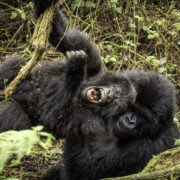
Gorillas are the largest living primates. Adult male gorillas, known as silverbacks, can weigh between 140–200 kilograms (310–440 lbs) and stand about 1.7 meters tall when upright. They have broad chests, muscular arms, and thick, dark fur that covers most of their bodies. Gorillas possess a pronounced brow ridge, wide flat noses, and large hands and feet adapted for knuckle-walking. Their movements are deliberate and powerful, giving them a calm yet imposing presence in the forest.
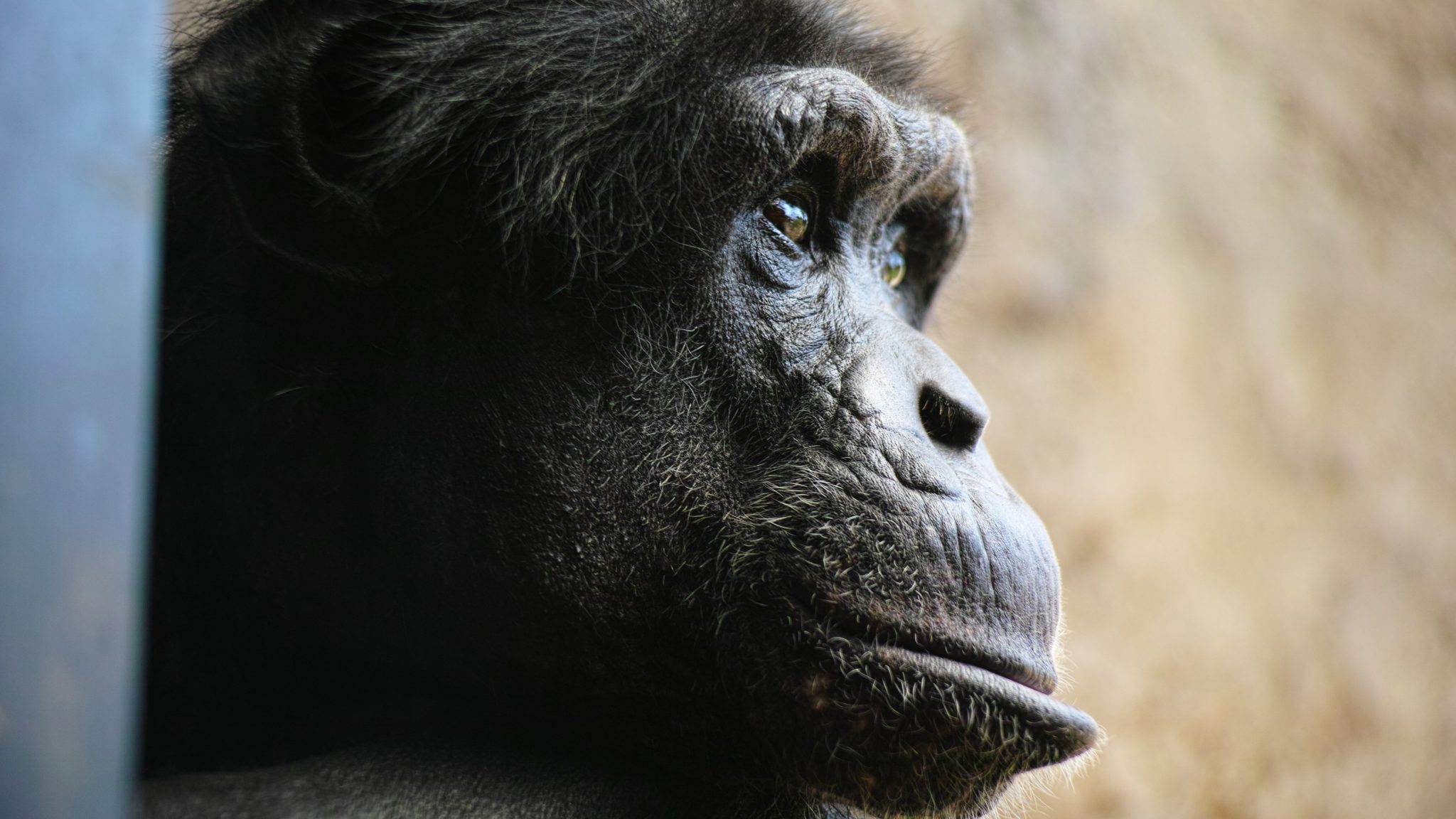
Chimpanzees, by contrast, are smaller and more slender. Adult males weigh around 40–60 kilograms (90–130 lbs) and average about 1.2 meters tall. They have lighter frames, longer arms relative to their bodies, and expressive faces capable of subtle emotions. Chimpanzees are highly agile both on the ground and in trees, adept at swinging, climbing, and leaping. Their hands and feet are adapted for both gripping branches and terrestrial movement, reflecting their dual arboreal-terrestrial lifestyle.
Other key differences include:
Fur color: Gorillas have uniform dark fur, while chimpanzees can have lighter or reddish-brown patches, especially on their faces and hands.
Facial structure: Gorillas have broader faces with large nostrils, while chimpanzees have smaller faces and more expressive features.
Body posture: Gorillas tend to be more upright when sitting or feeding, while chimpanzees exhibit more dynamic and flexible postures due to their arboreal adaptations.
Habitat and Geographic Distribution
Gorillas and chimpanzees inhabit overlapping regions of Central and East Africa, but their habitat preferences vary considerably.
Gorillas primarily occupy dense tropical and subtropical forests. Mountain gorillas are found in high-altitude forests such as:
- Bwindi Impenetrable National Park in Uganda
- Mgahinga Gorilla National Park
- Volcanoes National Park
- Virunga National Park
These forests are typically misty, steep, and rich in bamboo and understory vegetation, providing gorillas with abundant leaves, stems, and fruit. Gorillas are largely terrestrial, moving through dense forest undergrowth on the ground.
Chimpanzees occupy a wider range of habitats, from lowland tropical forests to woodland-savannah mosaics. Examples include:
- Kibale National Park
- Loango National Park
- Gombe Stream National Park
Chimpanzees are more arboreal than gorillas, often spending hours in the canopy for foraging and socializing. Their adaptability allows them to thrive in different ecosystems, and their complex social structures benefit from both terrestrial and arboreal spaces.
Dietary Differences and Foraging Behavior
Gorillas are primarily herbivorous. Their diet consists of leaves, stems, bark, and fruit, which they spend much of the day foraging and feeding on. Mountain gorillas consume over 30 kilograms of vegetation daily, a testament to the energy required to sustain their massive bodies. They rarely eat insects, although occasional termite or ant consumption occurs.
Chimpanzees, in contrast, are omnivorous. While fruit makes up a significant portion of their diet, they also eat leaves, nuts, insects, honey, and even small mammals. Chimpanzees are known for cooperative hunting, sometimes coordinating in groups to catch monkeys or other small prey. Their dietary flexibility reflects their intelligence and ability to adapt to different habitats.
Social Structure and Behavior
Gorillas and chimpanzees exhibit strikingly different social organizations.
Gorillas live in relatively stable family units called troops, led by a dominant silverback male. A typical troop includes several females and their offspring, and occasionally younger males known as blackbacks. Silverbacks are responsible for protection, conflict resolution, and group coordination. Conflicts are rare because the presence of a dominant silverback maintains order, and social interactions are generally calm and predictable.
Chimpanzees, however, live in fission-fusion societies, where group composition constantly changes. Social bonds are complex, with alliances, rank challenges, and coalitions influencing interactions. Alpha males maintain dominance through both strength and political alliances, and relationships among females, juveniles, and males are fluid. Grooming plays a central role in social cohesion, while play, conflict, and cooperation demonstrate their intelligence and social awareness.
Communication and Intelligence
Both species communicate using vocalizations, facial expressions, and body language, but chimpanzees have a more diverse repertoire.
Gorilla communication includes grunts, roars, chest-beating, and other vocal signals to express dominance, alarm, or reassurance. Their communication is generally context-specific and reinforces troop hierarchy.
Chimpanzee communication is more nuanced, with pant-hoots, screams, gestures, and even tool-based signals. They can convey emotion, intention, and warning messages, reflecting their advanced cognitive abilities. Observing these communications provides insights into their decision-making, problem-solving, and social intelligence.
Tool Use and Problem-Solving
While gorillas occasionally use simple tools, chimpanzees are celebrated for their ingenuity. In the wild, chimpanzees:
- Use sticks to extract termites from mounds
- Modify leaves to drink water
- Employ stones to crack nuts
- Hunt cooperatively with spears or coordinated strategies
These behaviors are learned socially and often differ between communities, demonstrating cultural variation. Tool use reflects foresight, creativity, and adaptability, hallmarks of chimpanzee intelligence.
Conservation and Human Interaction
Both gorillas and chimpanzees are endangered due to habitat loss, poaching, and disease. Trekking experiences must be conducted responsibly:
- Maintain safe distances to avoid disease transmission
- Follow park rules and guidance from trained trackers
- Support local communities through eco-tourism and conservation fees
Responsible tourism contributes to habitat protection, anti-poaching patrols, and education programs that ensure the survival of these incredible species for future generations.
Why Knowing the Difference Matters
Distinguishing between gorillas and chimpanzees enriches every wildlife encounter. Observing the imposing strength and gentle demeanor of gorillas evokes awe, while watching chimpanzees’ intelligence, playfulness, and social ingenuity inspires wonder. Understanding their behaviors, habitats, and conservation needs allows trekkers to engage responsibly, create lasting memories, and contribute meaningfully to wildlife preservation.
Gorillas and chimpanzees are not just wildlife—they are living windows into evolution, intelligence, and the complexity of life. Recognizing their differences deepens appreciation, respect, and commitment to protecting Africa’s great apes.
Request Quote
Popular Trips
Rwanda
- 1 Day Rwanda Gorilla Trek
- 2 Day Akagera Safari from Kigali
- 2 Day Gorilla Trek Rwanda
- 3 Day Akagera National Park Safari
- 3 Day Gorilla Trekking Rwanda
- 4 Day Rwanda Gorilla Safari
- 5 Day Rwanda Gorilla and Golden Monkey
- 6 Day Rwanda Primates Safari
- 7 Day Rwanda Wildlife and Gorilla Safari
- 8 Day Classic Rwanda Safari Tour
Uganda
- 10 Day Uganda Safari Tour
- 12 Day Uganda Gorilla and Wildlife Safari
- 3 Day Gorilla Trekking Uganda
- 3 Day Gorilla Trekking Uganda from Kigali
- 3 Day Murchison Falls Safari
- 5 Day Gorilla and Chimpanzee Safari Uganda
- 5 Days Gorilla and wildlife safari
- 6 Days Gorilla, Chimps and Wildlife safari
- 7 Day Uganda Wildlife Safari
- 8 Days Uganda Safari
Recent Posts

6-Day Lifestyle Safari Itinerary

Common Safari Mistakes to Avoid in Uganda